This is the hardest of the three ‘epilogue’ posts to write; I’ve been stymied to find the best way to describe its impact. This third purpose for my trip focuses on factors clearly outside me, but in recent years has agitated me greatly. There is a tremendous disconnect between the incredibly beautiful things British culture has given the world, and the equally vile circumstances it has wrought through its colonialism and imperialism. I had no clear goal to accomplish on this journey regarding this confusion, but I hoped spending time walking a long way, ruminating with it while immersing myself in the British landscape, might settle things a little.
I could write pages about my discomfort with my heritage; from the centuries of abuse of the Irish and Scots through Penal Laws, Clearances, the deadly brutality of the Black & Tans (disturbingly my grandfather was a member) to the colonial expansion involving systemic exploitation, racism, environmental destruction, the slave trade, and building a monopoly of wealth for private companies while impoverishing millions of people. At its peak in the 19th century, Britain controlled a quarter of the world's population and a third of its land surface. There was a particular pride that “the sun never sets on the British Empire”. Britain had developed a massive organizational feat. I was lovingly and proudly reminded of this during my childhood. My parents and their siblings were raised between WWI and WWII. They had witnessed their London homes destroyed, fought in hard battles, and survived. They believed in the strength and goodness of their country. I get that. But that was only part of the story, allowing them to delight in their British glory. I absorbed this from them. If one ignores the darker history, there is much that shines: beautiful artwork of a gazillion poets, painters, authors; fabulous, intricate stone buildings; parliamentary government dating back to 1689; amazing scientific discoveries; Cotswold villages, London railway stations,, Cadbury chocolate, black cabs, Monty Python, Pink Floyd, John Locke, Jane Goodall, Judy Dench. And of course, the extensive public footpaths encouraging movement across the British landscape.
I love England deeply, to my core. I also hold profound anger and shame that horrific past actions enable me to live a life of peace, comfort and opportunity. While I walked, I noticed, read, asked, listened and learned. After weeks of walking, I did not arrive at an easy conclusion; there is none for such a complicated and confounding history. I became more settled, though. More hopeful. I realize that this situation is not unique to British history; it is part of all human societies. There are difficult, mixed-up legacies pretty much anywhere you look that people have walked on this Earth. But this was my personal journey. When you walk eight hours a day across Britain you come upon a lot of history. There are a companion amount of interpretive signs. Fortunately, I love to read signs. I almost find it physically unpleasant to pass one without reading its entirety that some person lovingly put there to help me better understand this place. I learned I was walking across a scarred land, from plunder, battles, treaties, enslavement, corruption, hatreds, reconciliations - going back thousands of years, before Britain was Britain. I knew this before my walk, but to be on the exact ground of these events as if in a time machine, brought a visceral understanding to the vicissitudes of society. People do wonderful and awful things, on repeat. This is not excusing bad behaviour, but it does cycle. Signs of more recent history described slightly less horrific goings on than that of centuries earlier. As I walked an acceptance of our human frailties gingerly grew.
And as I walked, people asked why. Why was I walking? I shared about the difficult reason of coming to terms with my heritage. Usually, I received dubious looks when mentioning this purpose, and the conversation easily veered. Occasionally some folks met it with indignation, avowing Britain’s wonderfulness by listing all the great things they could think of, many in sight of us at that moment: bluebells, sheep, green hillsides, an old stone church, a pint in a pub, usually the monarchy was thrown in there. At this I agreed that royalty is pretty cool, and I walked on. Sometimes, though, the person would nod in agreement, and then I’d often receive information that buoyed my hope in a complete history being told. From Karen who opened her home to me in Bristol I learned of ‘Heirs of Slavery’, founded in 2023 by group of people who had discovered that their ancestors acquired significant wealth from industrialized enslavement of African people. They are now supporting reconciliation, reparative justice, and the open confrontation of legacies of transatlantic enslavement. Here’s their vision https://www.heirsofslavery.org/
It was ironic that earlier that day I’d enjoyed lunch at Ashton Court Estate, built with proceeds earned on the back of the slave trade. Fun fact: they Smyth family became millionaires from the British government payout in 1807 to compensate them for the loss of their “property” when the slave trade was made illegal in the UK. The Heirs of Slavery founders are modern day heroes.
Weeks later, in the Scottish village of Coldingham, I stayed at an airbnb with Carol. Over a hearty breakfast of porridge and very strong coffee, I shared with her the love/hate feelings with my heritage. She asked if I had heard of the UK government program, Operation Legacy. I had not. Evidently, there had been an organized, systematic attempt to destroy evidence that the British Empire had committed financial impropriety and human rights abuses against colonial citizens. This fact didn’t sit well, but the fact that the UK courts had provided a means for it to come to light and that the documents are available for public access in the National Archives was good news. If you’re interested in learning about this disturbing program:
https://theconversation.com/operation-legacy-how-britain-covered-up-its-colonial-crimes-225330
https://www.theguardian.com/uk-news/2013/nov/29/revealed-bonfire-papers-empire
A Ted Talks short video! https://www.youtube.com/watch?v=oPGVGckn7kQ
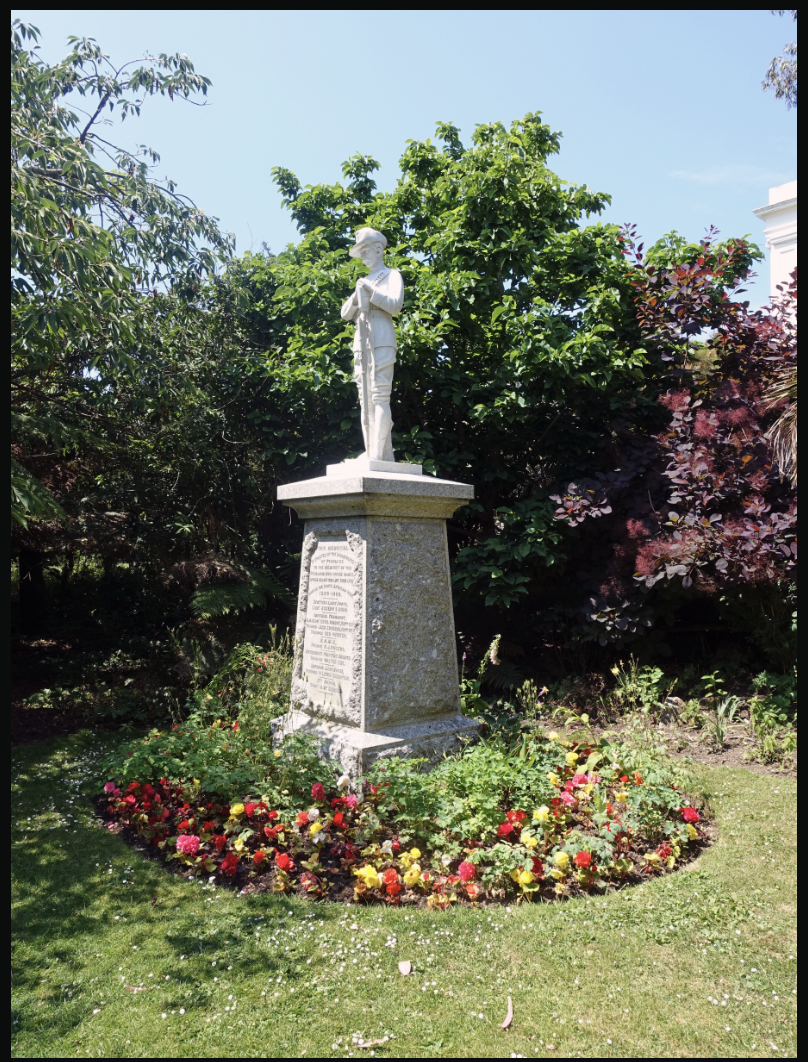
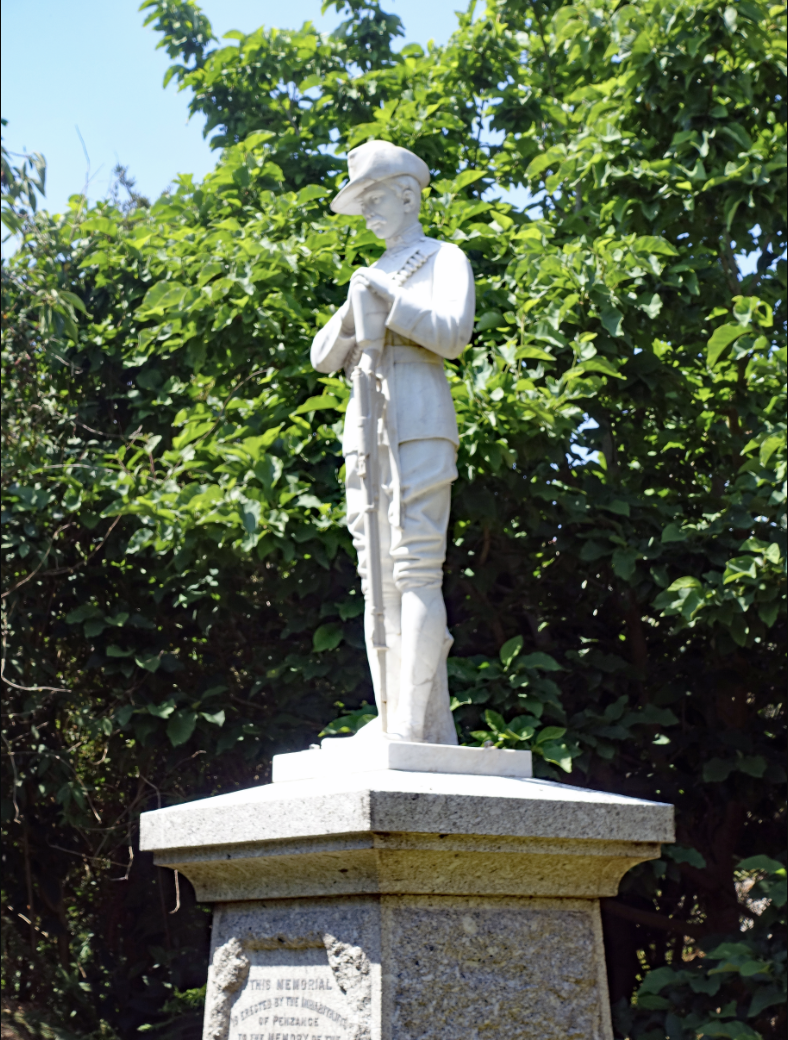
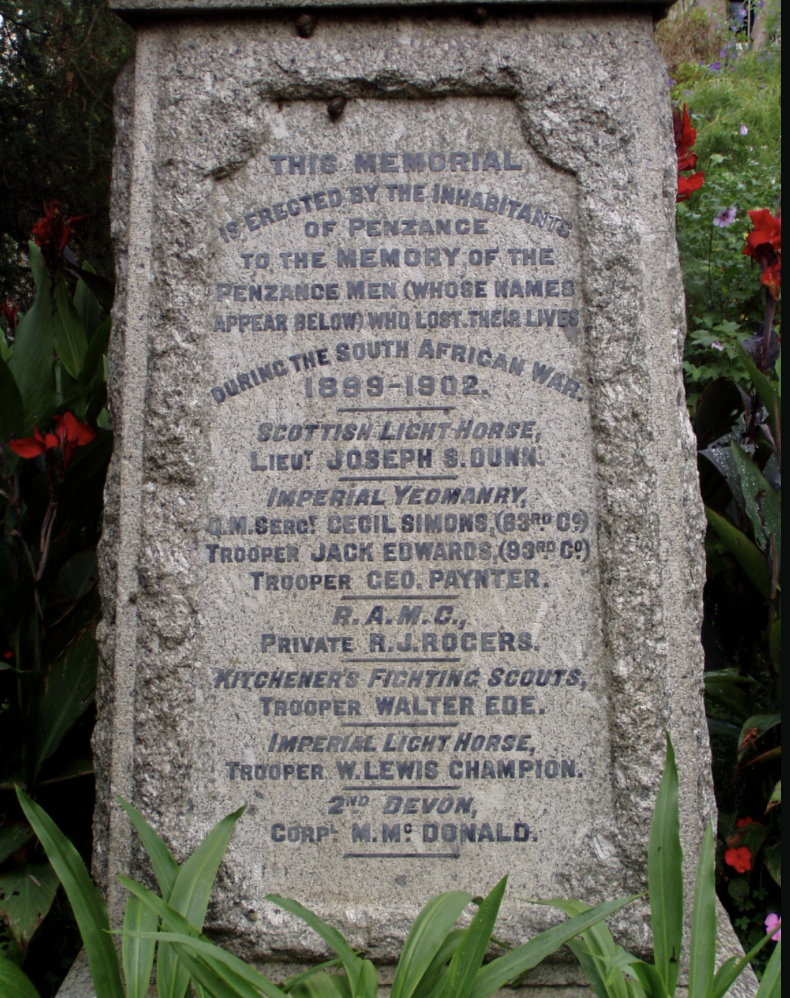
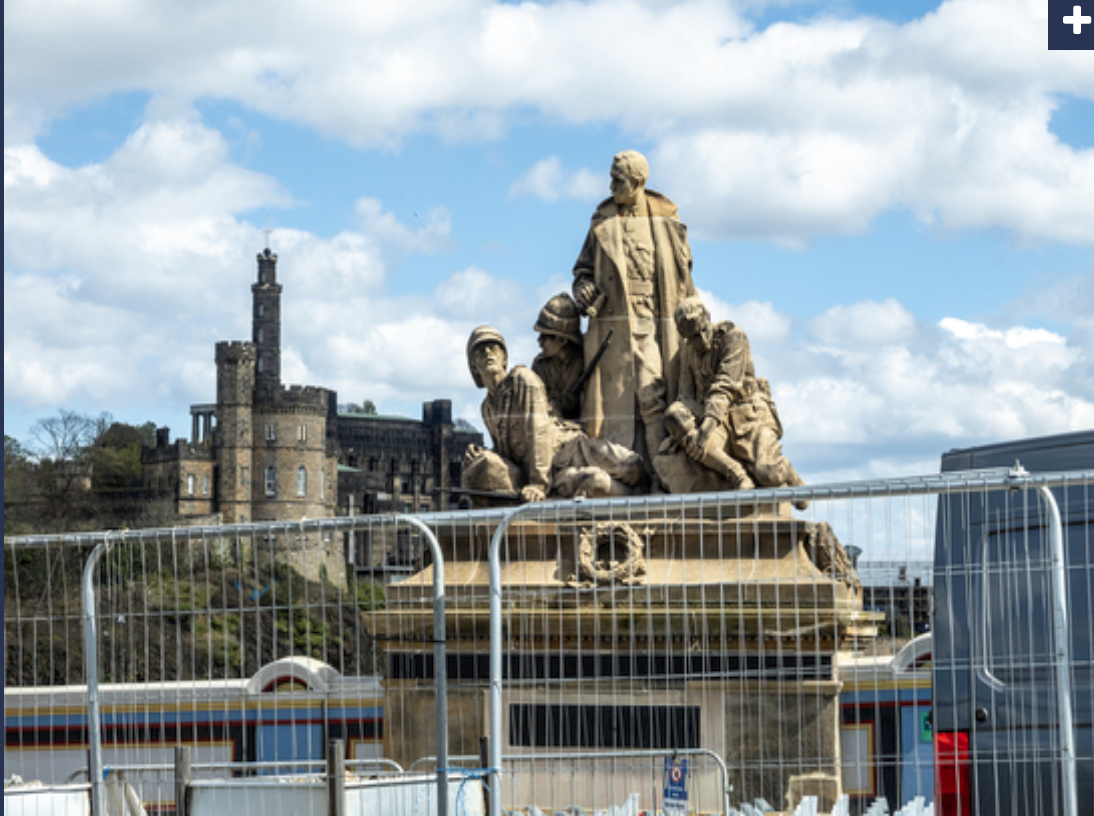
Interestingly, the first and last days of my trip played a role in the calming of my angst. On both of these days I walked passed, and was typically disturbed by, memorials to the South African Boer War of 1899-1902. Most people in the US don’t learn about this war, when the British military fought the Afrikaner Boer. There was nothing about this war that physically threatened the UK; it was a fight over the control of gold mines and the UK’s management of the global gold standard. Yet this didn’t stop the British government from portraying it as a national security threat. The war was massively costly to Britain, both in terms of government debt and lives lost. To calm public dismay, impressive statues were quickly installed across the country to honor the great loss of young men, successfully maintaining the message that to die for Britain is a noble cause. Upon arriving in Cornwall on March 31, Kimberly and I wandered around Penzance. We turned down a small lane and stumbled upon the entrance to Morrab Gardens. While wandering its paths, I came upon one of these statues. I could tell by the uniform of the soldier standing upon his column he was pre-WWI. At the time I didn’t know much about the Boer War, but I did understand that most of the colonial armed conflicts were not really about defense, and that the names of the boys on the plaque below the immortalized marble soldier had probably lost their lives in a cause that had nothing to do with them: less heroes and more duped innocents. “Great,” I thought,“ a sadly, frustrating start to this trip.” Eventually, navigating my way along the paths, my spirits lifted, and I grew enthralled by the beautyand kindness I encountered each day. I forgot about the statue in the garden in Penzance. Then, on June 21, after walking fifteen or so miles into Edinburgh, Annegret, Tory and I weaved through the throngs of tourists, and crossing the North Bridge I looked across the busy street and spotted an impressive statue standing in pride of place at the middle of the span. It was surrounded by fencing to protect it while the bridge or itself was being cleaned up, but it still exhibited a definite glory. The soldiers were dressed in an older style than typically one sees representing 20th century battle attire. Tory had noticed the statue as well, and we wondered aloud what war was being represented. After the long day’s walk, with all the crowds jostling for room on the pavement, we weren’t about to cross the street to try to look at the plaque to get the answer. Instead we enjoyed an educated guessing game based on what we saw on the grand statue, and our collected minimal knowledge of 19th century colonial warfare. Googling it later, we weren’t far off. It's a prized sculpture memorializing troops killed in campaigns between 1878 and 1902 (all sorts of opportunities to die protecting the colonies from Afghanistan, India, Egypt, as well as South Africa!). I found it almost humorously ironic that my long trip was bookended with these two fabulous statues glorifying a part of my heritage of which I was exceedingly unproud; there must be some meaning
there, but what?
I had five days before I would fly back to California, and on a crazy cross country trip back to Cornwall to say ‘thank you’ in person to my friends, the meaning became clear. Suzanne and Richard had become such an important part of my entire trip, from helping the departure from Land’s End and taking Kimberly and me in for Easter, and ultimately helping me safely cross the many miles to Scotland with Richard’s generous help creating maps and walking routes, that I knew I must travel back to where I started to see them again. It was very odd to make in two days via train the journey that I had just walked over three months, but such is the nature of travel in 2026 - we have choices, slow or fast, depending on one’s need. Suzanne and Richard picked me up from the train station, and we drove to the small village of St. Ive to visit a new museum - the Story of Emily. https://thestoryofemily.com/ This place is AMAZING. Emily Hobhouse was a social-welfare and anti-war activist in the early 20th century. She grew up in this small village, and now a group has honored her legacy by building a beautiful educational center to encourage all the good to which she dedicated her life. Her former home has been renovated to when she was a teenager, and an additional museum houses a fascinating and engagingexhibit to explain the Boer War. Emily traveled to South Africa during the war and was instrumental in publicizing the civilians’ great suffering in Britain’s concentration camps. She helped change how the British government and public faced the atrocities that were happening. The museum uses an array of story-telling technology to create an experience I will never forget. Despite learning about horrific and appalling events, it was uplifting that great curatorial skill and creativity is being used to tell the entire history. We have to face it, learn from it. The museum was full of others hearing the complete story as well. This is the way forward. Let’s keep the statues and memorials, but also learn the full, often ugly, story of our past. We have the capacity to behumbled, dropped a few notches from the glorious heroic fictions of what we were told. I am not afraid of the truth: my ancestors failed sometimes; they were greedy, foolish, mean and cruel. But they were also brave, creative, funny and kind. I don’t want half the story. We don't develop from ease and being kept in the dark; we grow by confronting hardships and bad choices in order to become stronger, wiser and make better choices.
Try it.
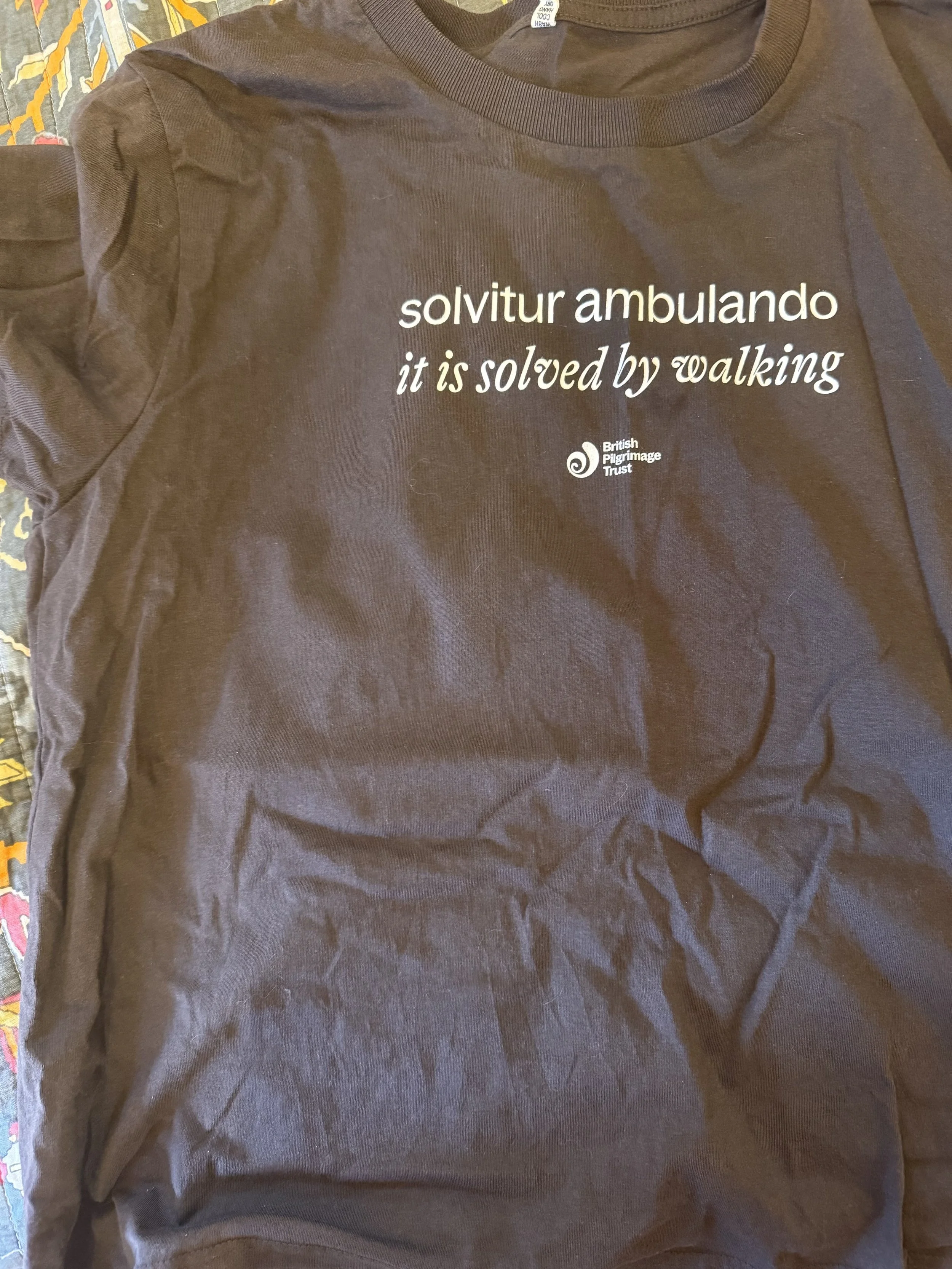
It is not an unusual thing to feel conflicted, and many months ago I thought it a good idea to follow advice often attributed to the philosophy of St. Augustine: ‘Solvitur ambulando.‘ ~ It is solved by walking. Complex problems can often be worked out simply by getting up and walking; the continued stepping forward clears the mind to address a dilemma. I walked each day, spending much time rolling ideas around in my head. When I fatigued from the seesaw of discovering little bits of information about the great in British history and the not so great, I returned to the sound of my steps or the sight of soft light slanting through the trees. Birdsong was a lovely distraction. Flowers lovingly nurtured in narrow gardens caught my attention. Absorbing myself in these moments softened the discomfort of holding two opposing facts. When you’re confronted by two things that are challenging to hold simultaneously, step out. Even a short stroll around the block helps; let your senses take in what you are slowly passing through. Often the conundrum you’re facing will settle into place where the disparate details can be held a little more gently. That’s what happened to me. Nothing about my heritage has changed, but I know I can hold both the pain and joy, and keep stepping forward.