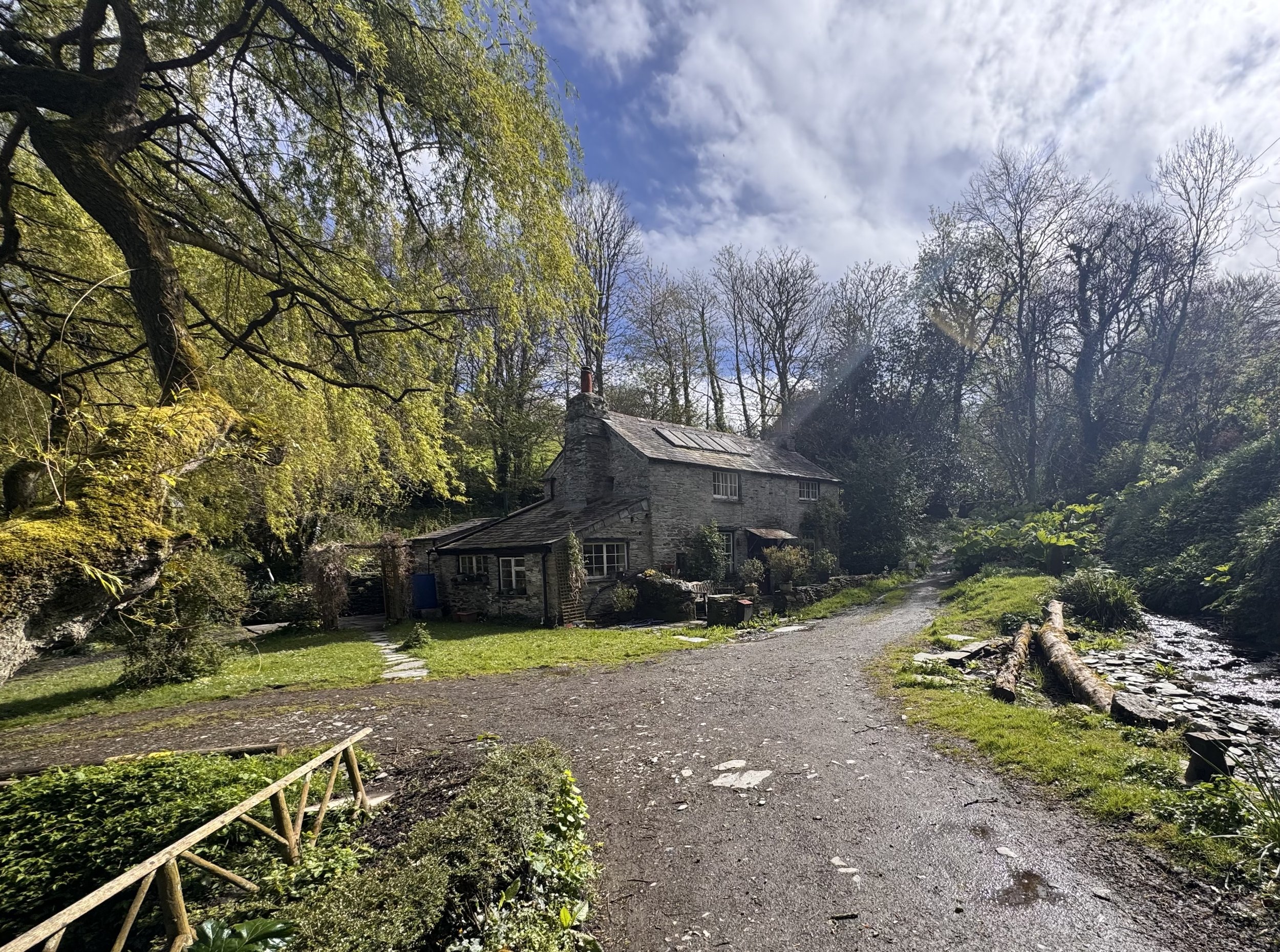
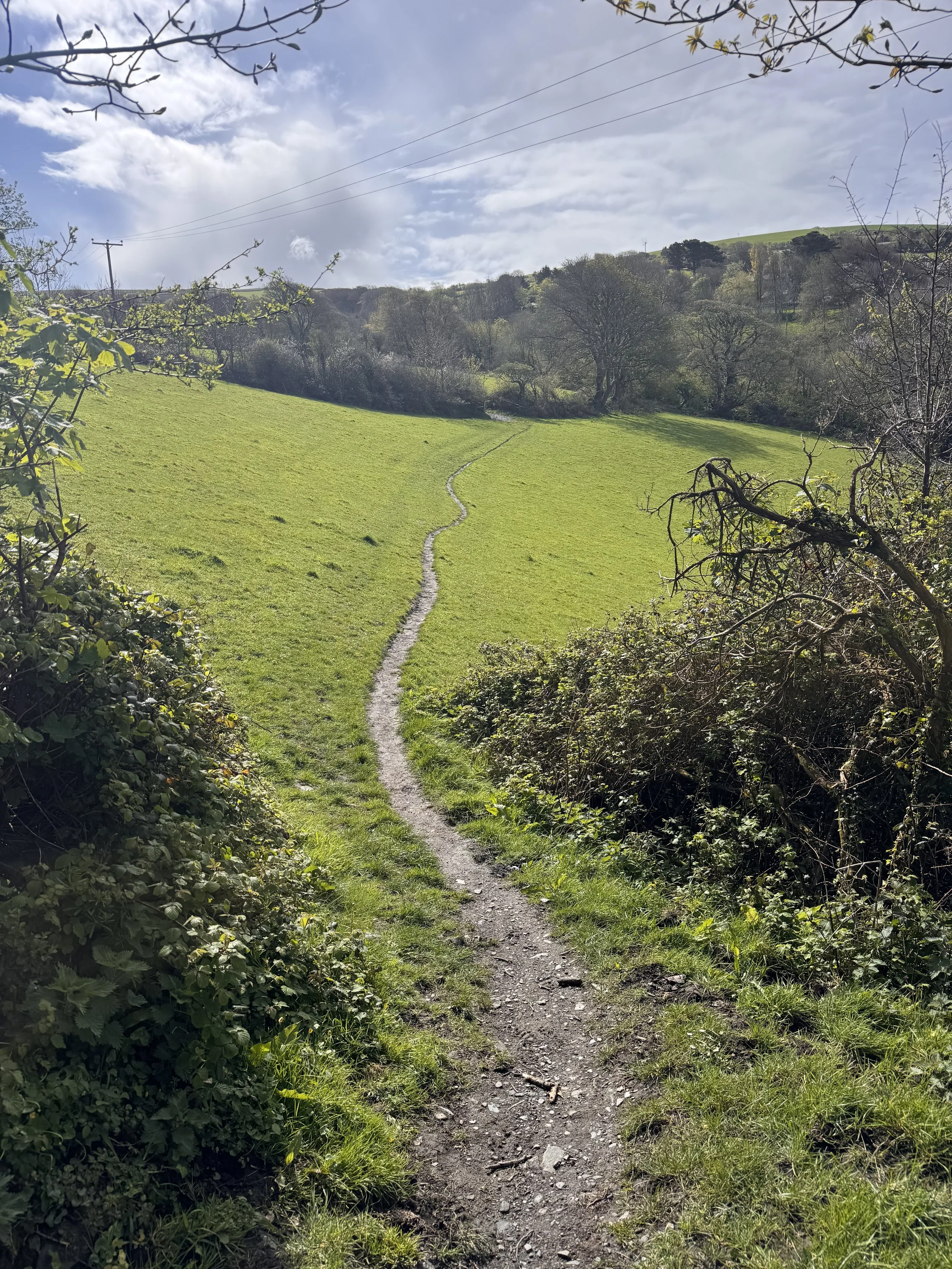
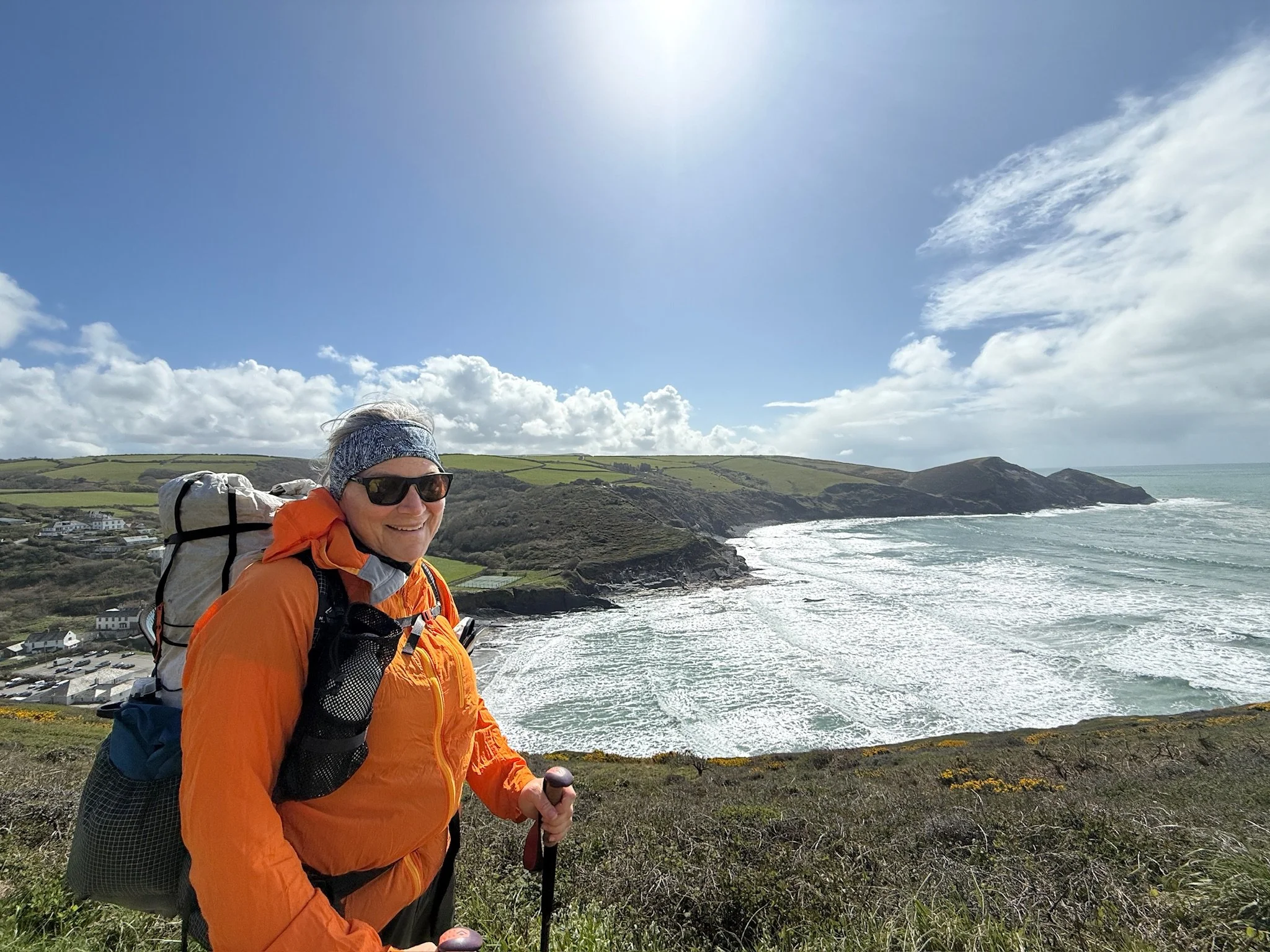
We walked 7.8 miles today, but not sure how long it took because it was a little unconventional. When we arrived in Boscastle yesterday we were indeed smitten. I had expected it to be a very small place with just a pub, the hostel, and maybe a few other buildings. Instead we found a large bucolic village with interesting little shops, loads of paths to explore that meandered through the National Trust protected land on the hillsides and along two beautiful creeks - not to mention the amazing and wild circuitous hidden harbor where the village meets the Atlantic Ocean. So, instead of jumping on the coast path early again, we decided to lean into our flexibility and spent the morning wandering around the hills, valleys, orchards, creek-sides, and lanes of Boscastle.
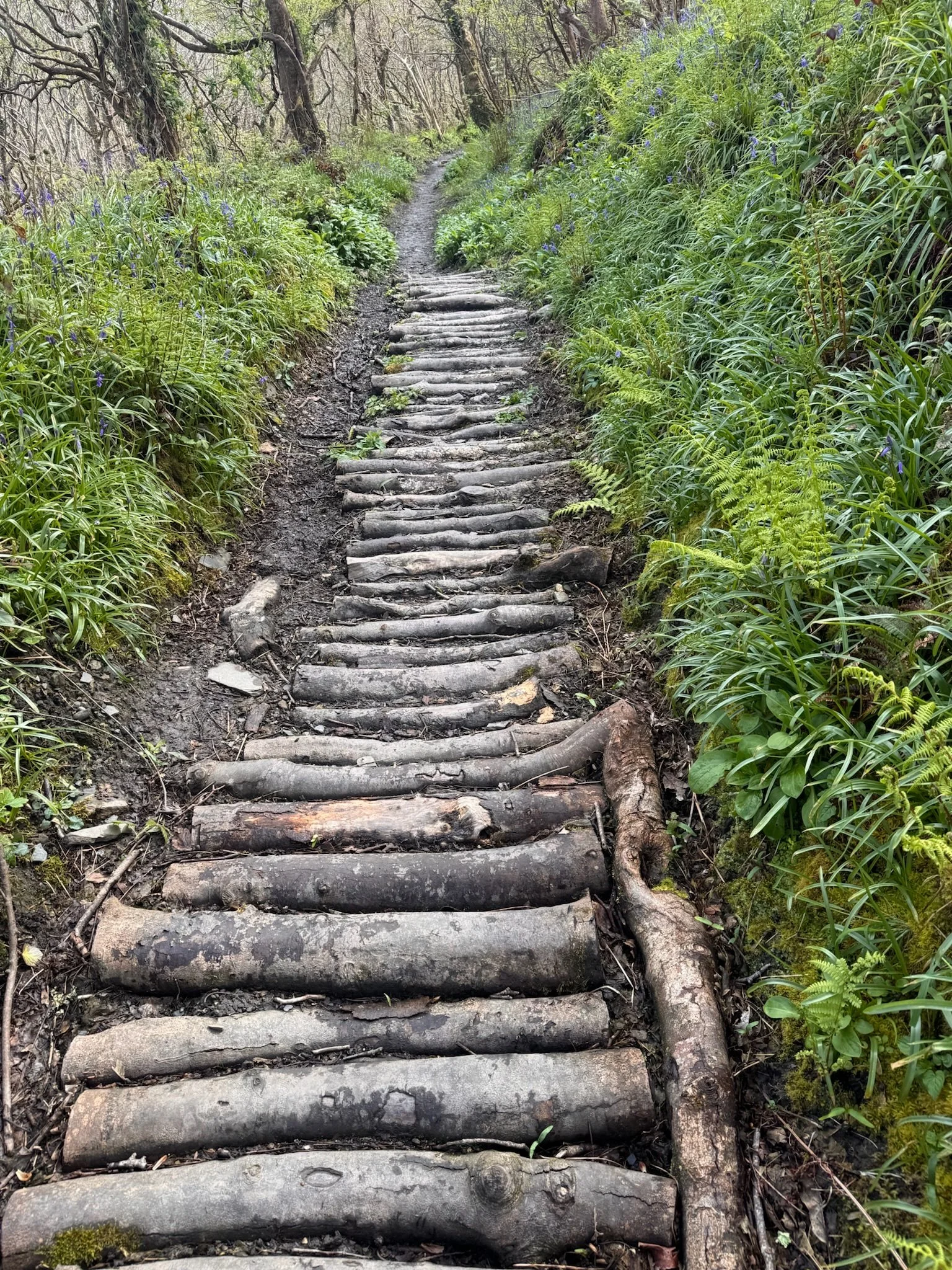
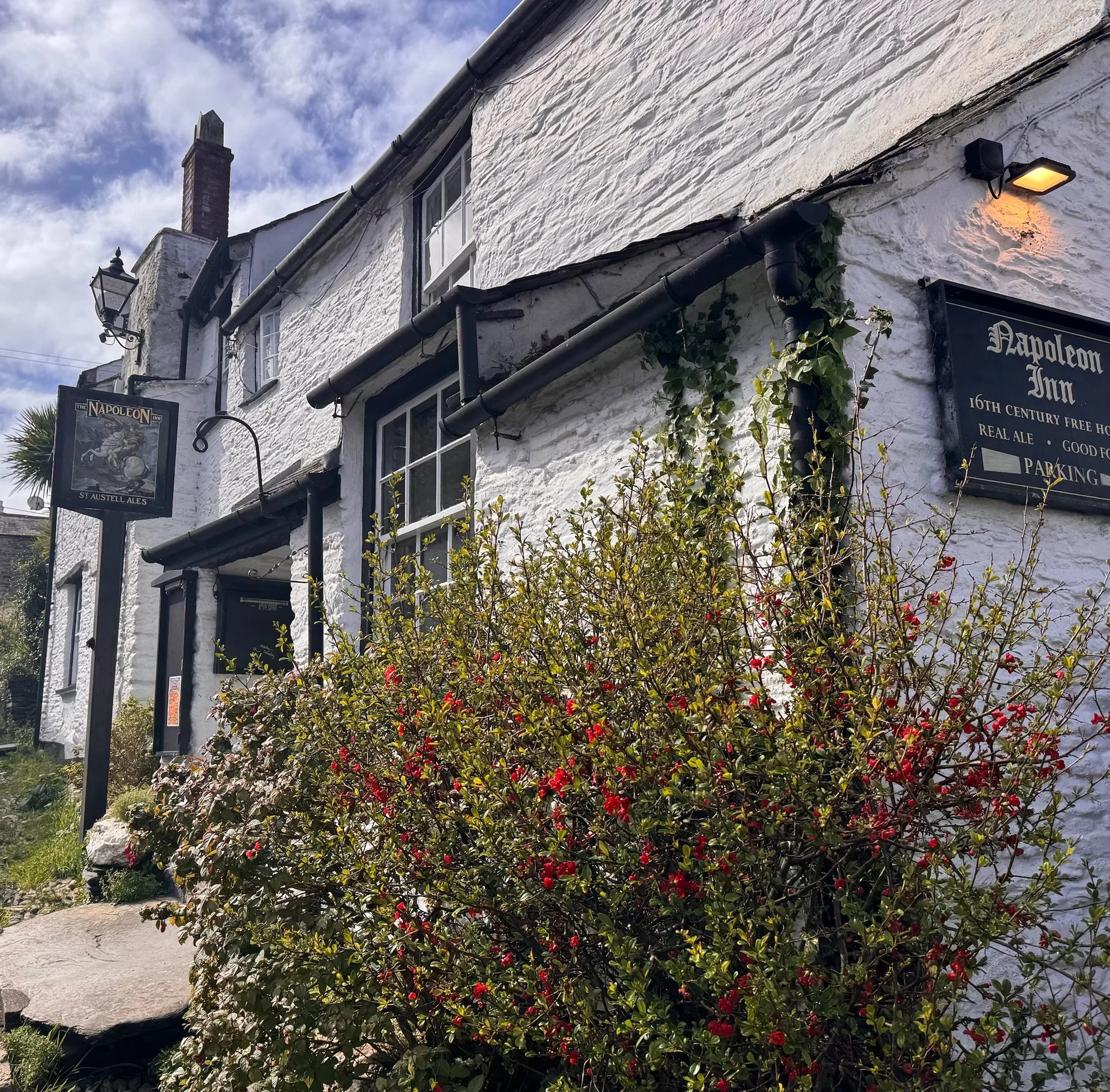
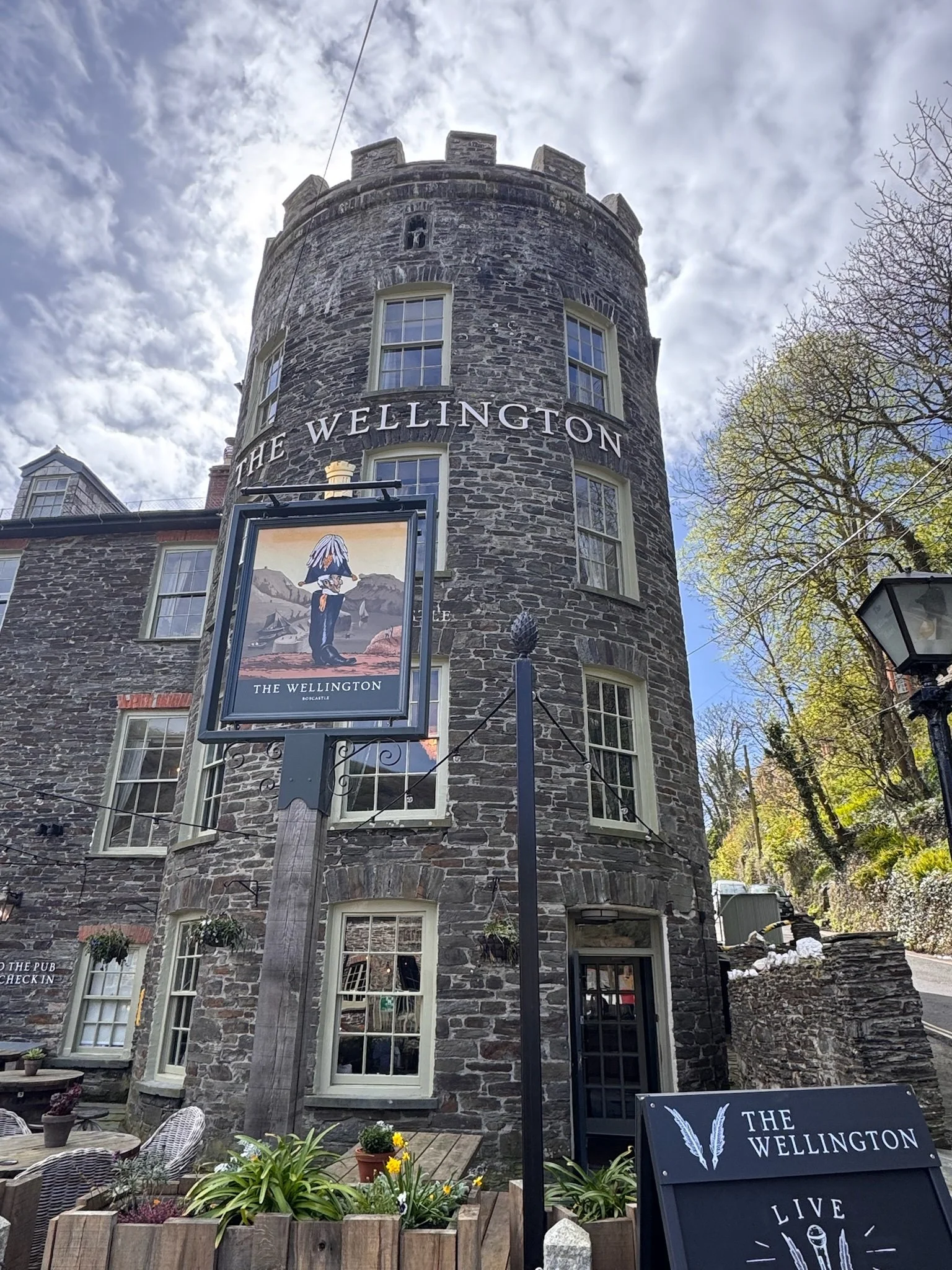
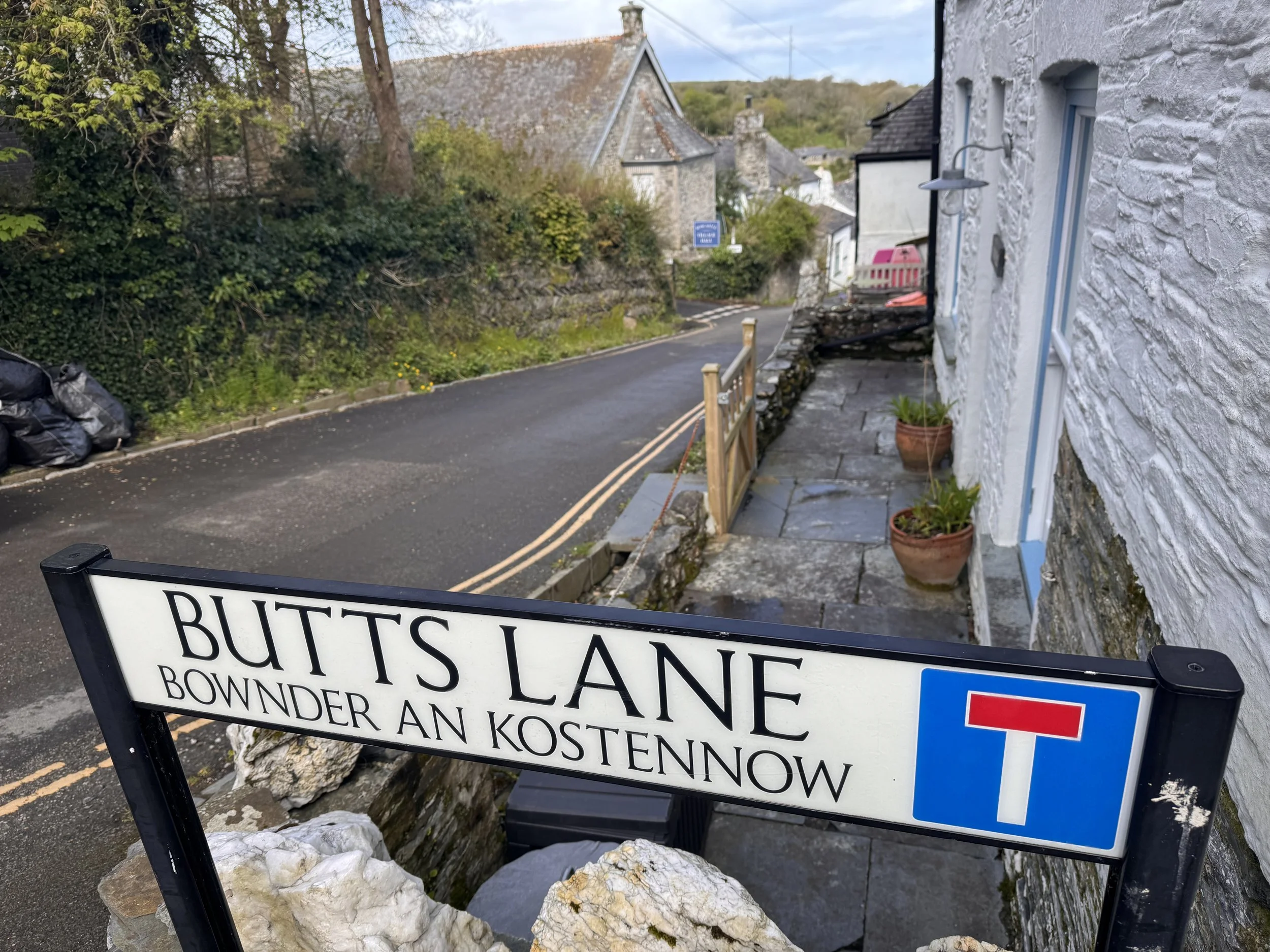
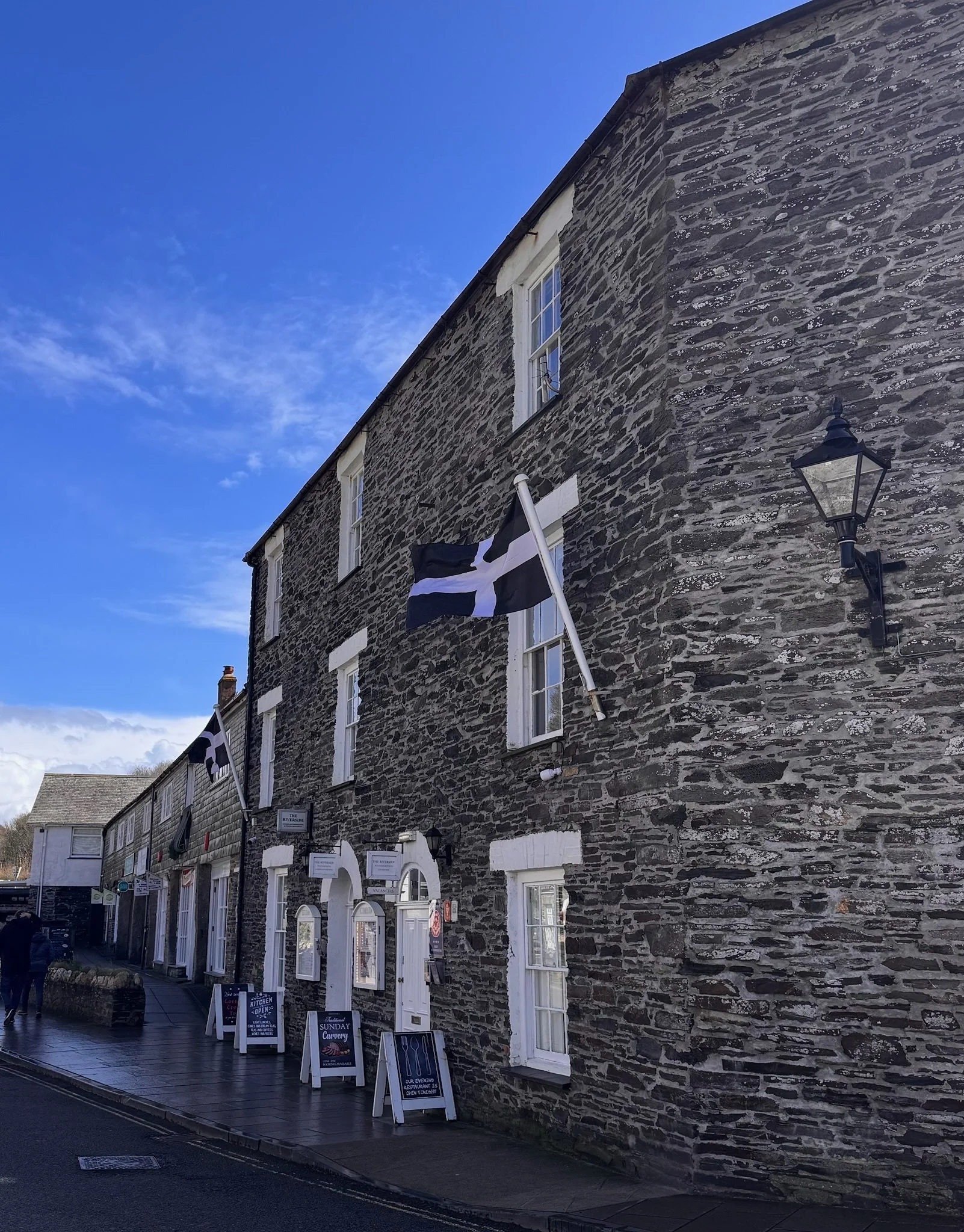
The houses were compact and perfect to their location, each with a creative name. Street signs, like much of Cornwall, were in English AND Cornish to provide a measure of identity to the proud inhabitants of this far west county; it’s originally a Celtic place like Wales, Scotland, Ireland, and even Brittany in France and Galicia in Spain. You often see St. Piran’s flag flying as well, the white cross on a black background standard of Cornwall. We saw many wildflowers, clever ways to mitigate muddy paths, gorgeous cottages. My favorite thing was the two pubs in town: the Napoleon Inn and down the hill The Wellington. Battling it out for pints now whatever was not sorted at Waterloo!
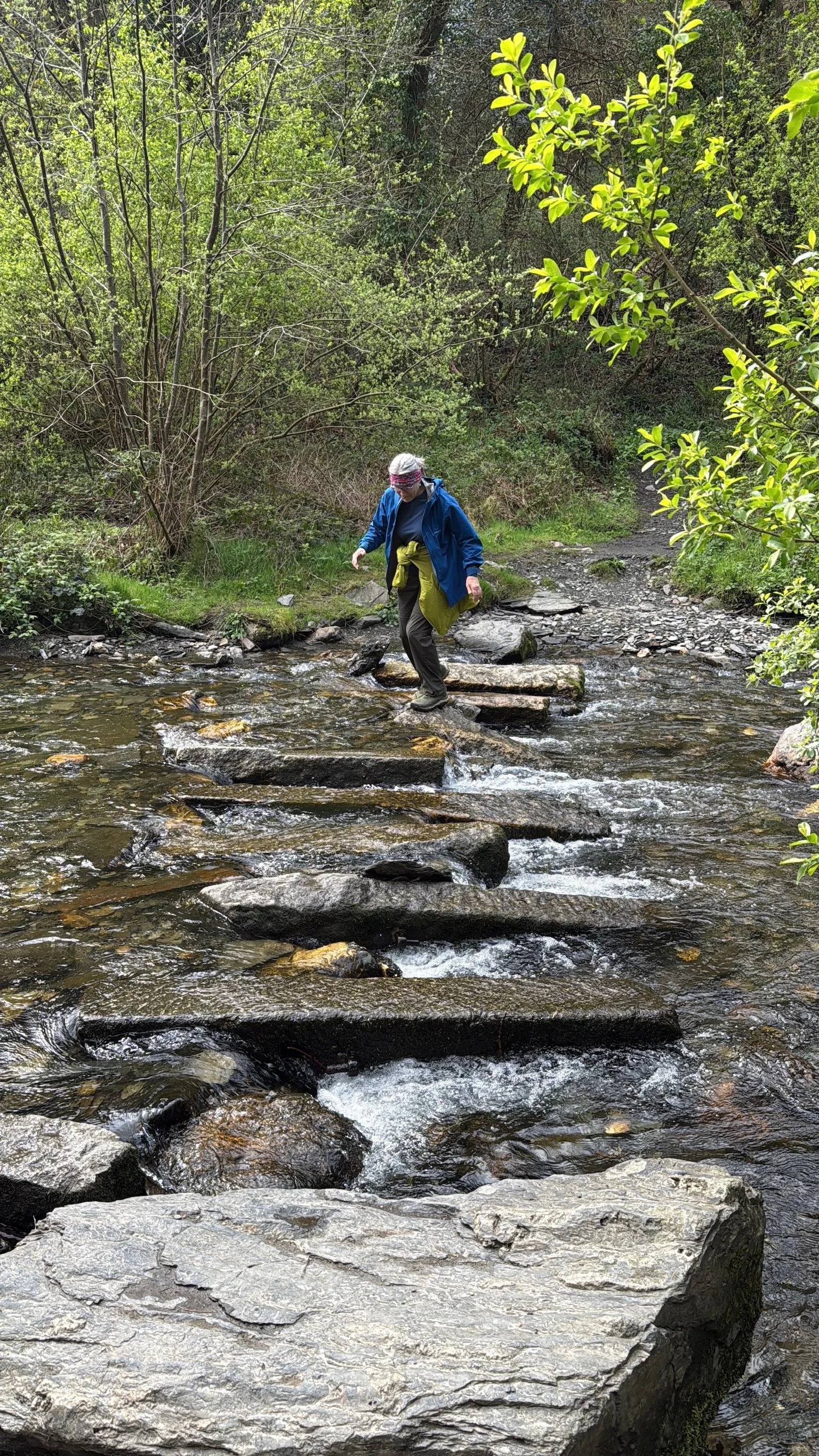
Then we caught a local bus to Crackington Haven (skipping a few miles of the coastal path and the highest cliff on the whole thing) to join the cliffs and steep valleys of the SWCP again there, walking almost 5 miles to our own haven of a bed & breakfast. We had to find our way across fields and through farmyards, over a ford, correct course multiple times (grateful for off line maps and gps signal!), and we arrived at our 14th century farmhouse paradise. Yes, that’s right, the main part of the building dates from the 1300s, and is built with cruck framing - an important medieval style where pairs of large curved timbers provide the house frame. I find it wonderful and fascinating that instead of tearing down buildings when styles go out of fashion it modernization is needed, Europeans usually figure out a way to use the prior dwelling and alter it sympathetically (usually) and conserve resources. They live in their history, and I think this tie to generations is important for keeping perspective on what is valuable and how can we honor the past to provide for the future.
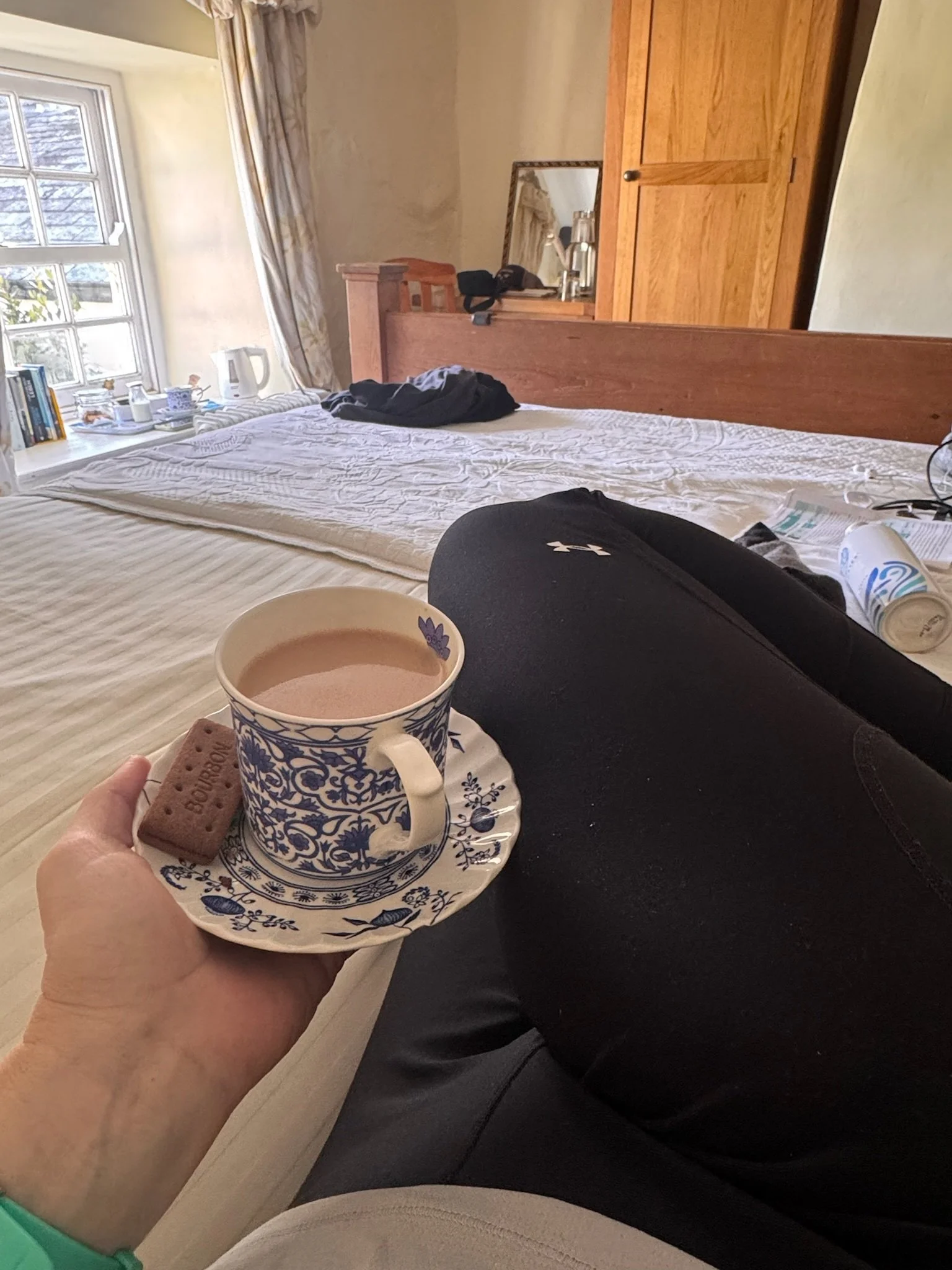
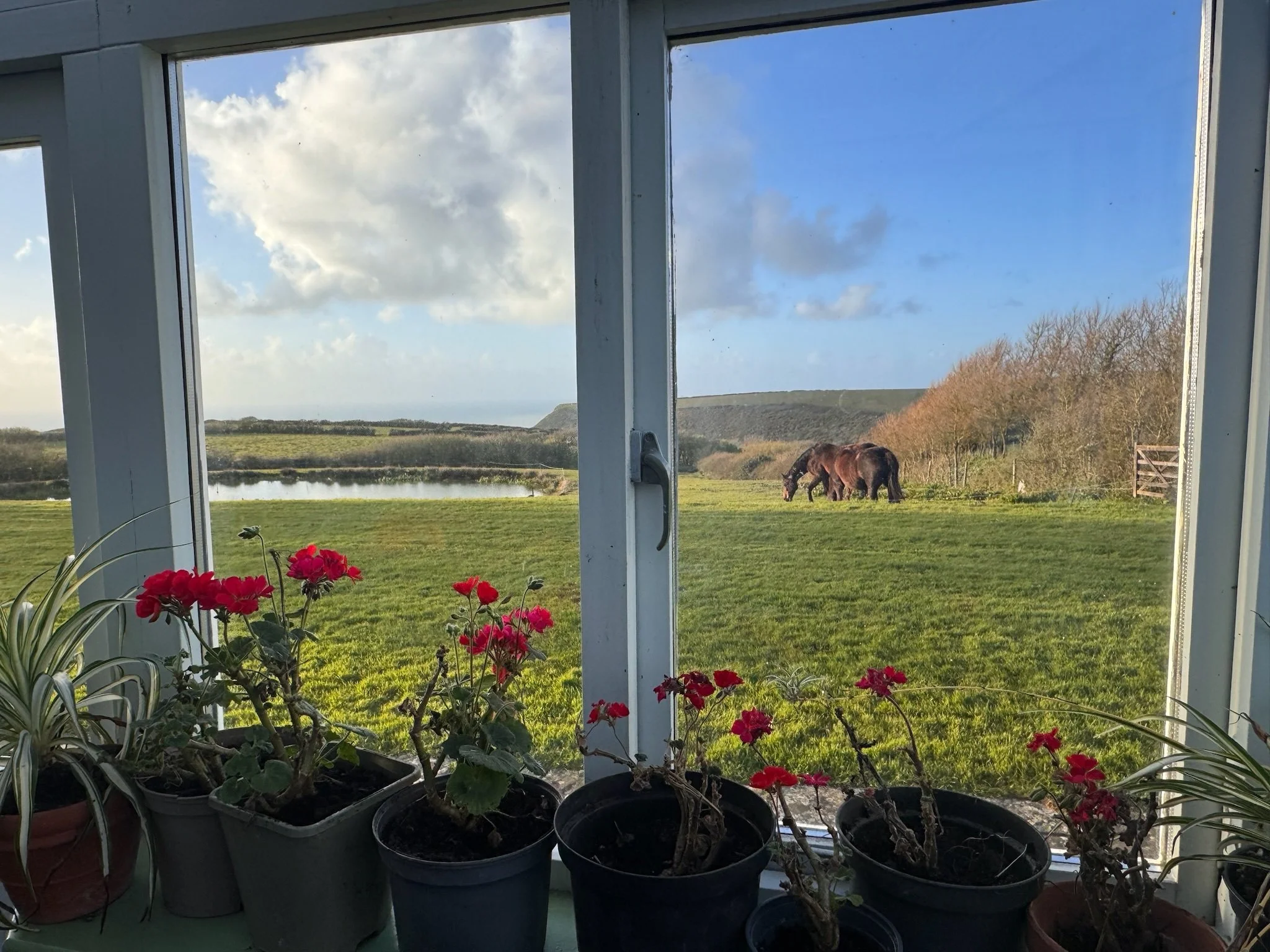
We arrived about 4:30pm, had a quick tour of our host’s historic home, met the dog, saw the horses as they wandered up to the house, took hot showers, cups of tea and biscuits in our room, waited by the fire for our 3 course dinner, and now I’m back by the fire writing this. Pretty much everything served here comes from its 35 acres, including the forest where the venison is found. It’s all organic, free range; these people obviously care deeply for the land, their animals, the place’s history. Nothing is wasted and the hard work to run a farm with this level of attention is evident. The views cross over the pond, to the fields, the forest and to the ocean beyond. It was made that much more special by walking to it, and finding it popping up just around a corner of a tall edged path when we had just about given up.