Yesterday was a good day: walked 14.3 miles, crossed into Scotland decisively with no back and forthing over the border the way the path in the uplands have you do, started following the Berwickshire Coast Path, and also started not feeling too well. I don’t know if it was something I ate, or maybe I didn’t drink enough water, or it’s my painful abdominal symptoms of the last few years irritatingly still hanging around (symptoms that have completely and joyously disappeared for the last 3 months of walking on this journey!) I was fine while walking, but when I arrived at my Airbnb I just wanted to lie down with a hot water bottle. So I did. After a nice long bath. I finally fell asleep, and woke up much better, and reflected on the previous day over the delicious breakfast my host prepared. So, this post is a day late.
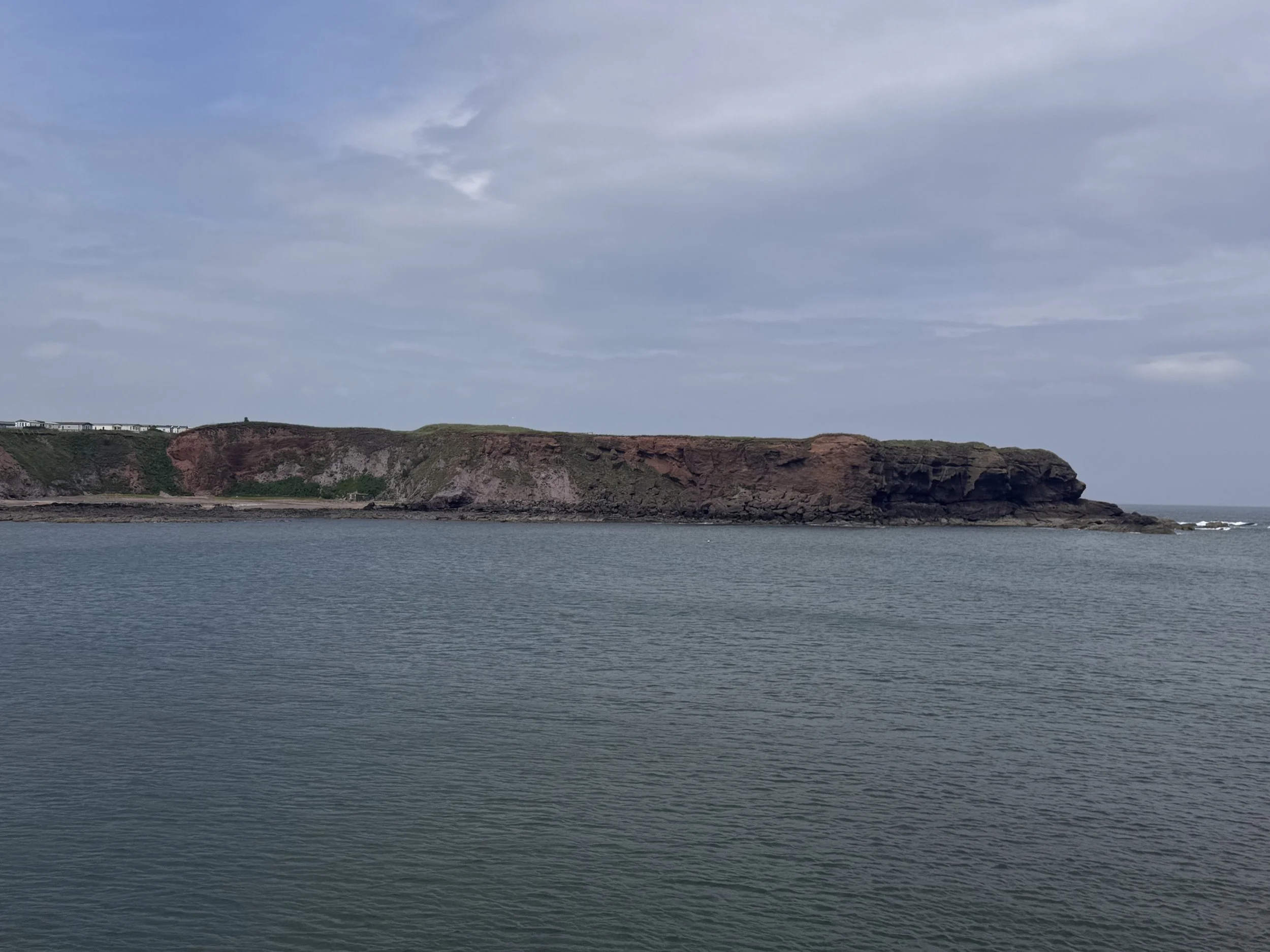
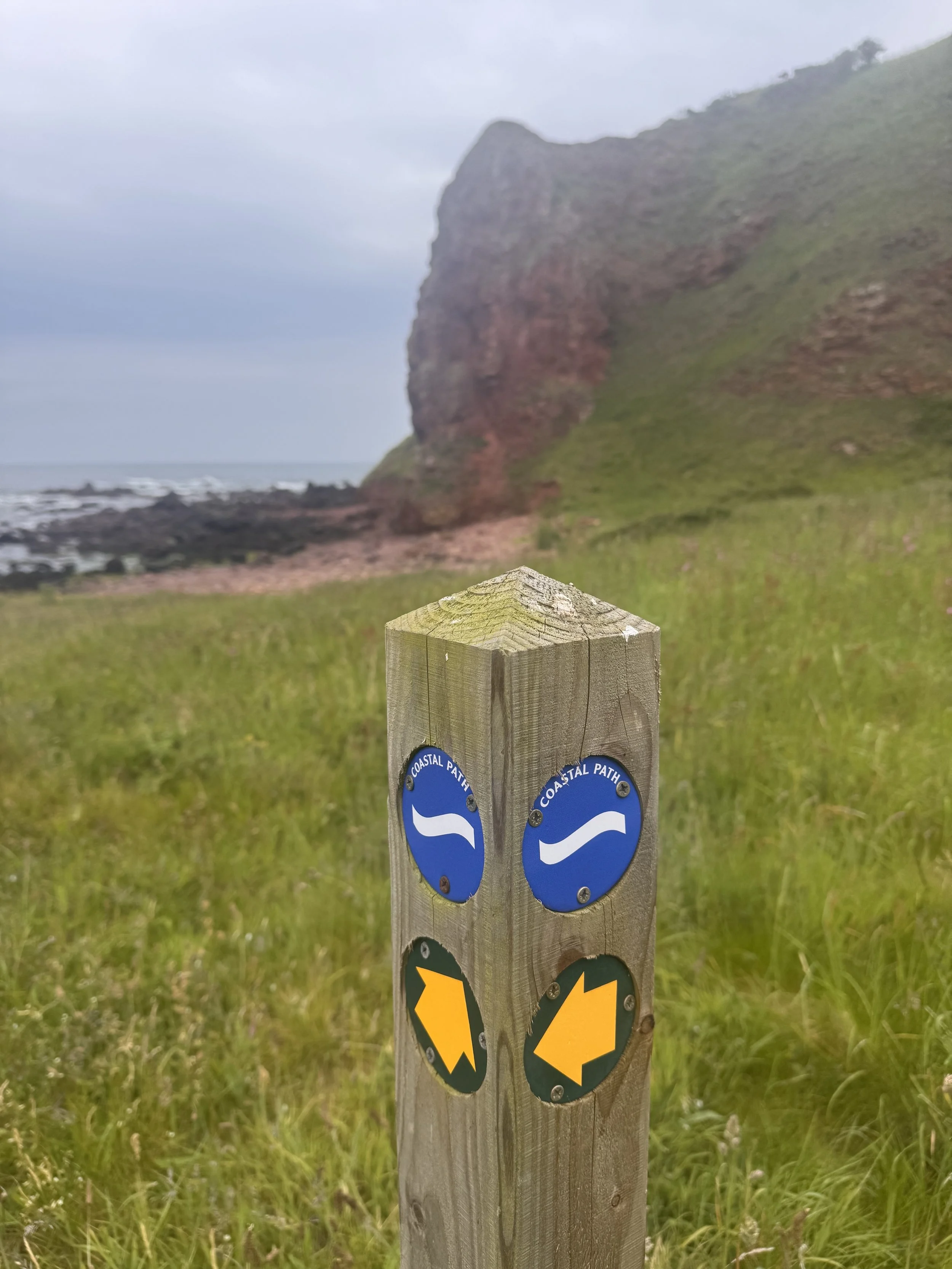
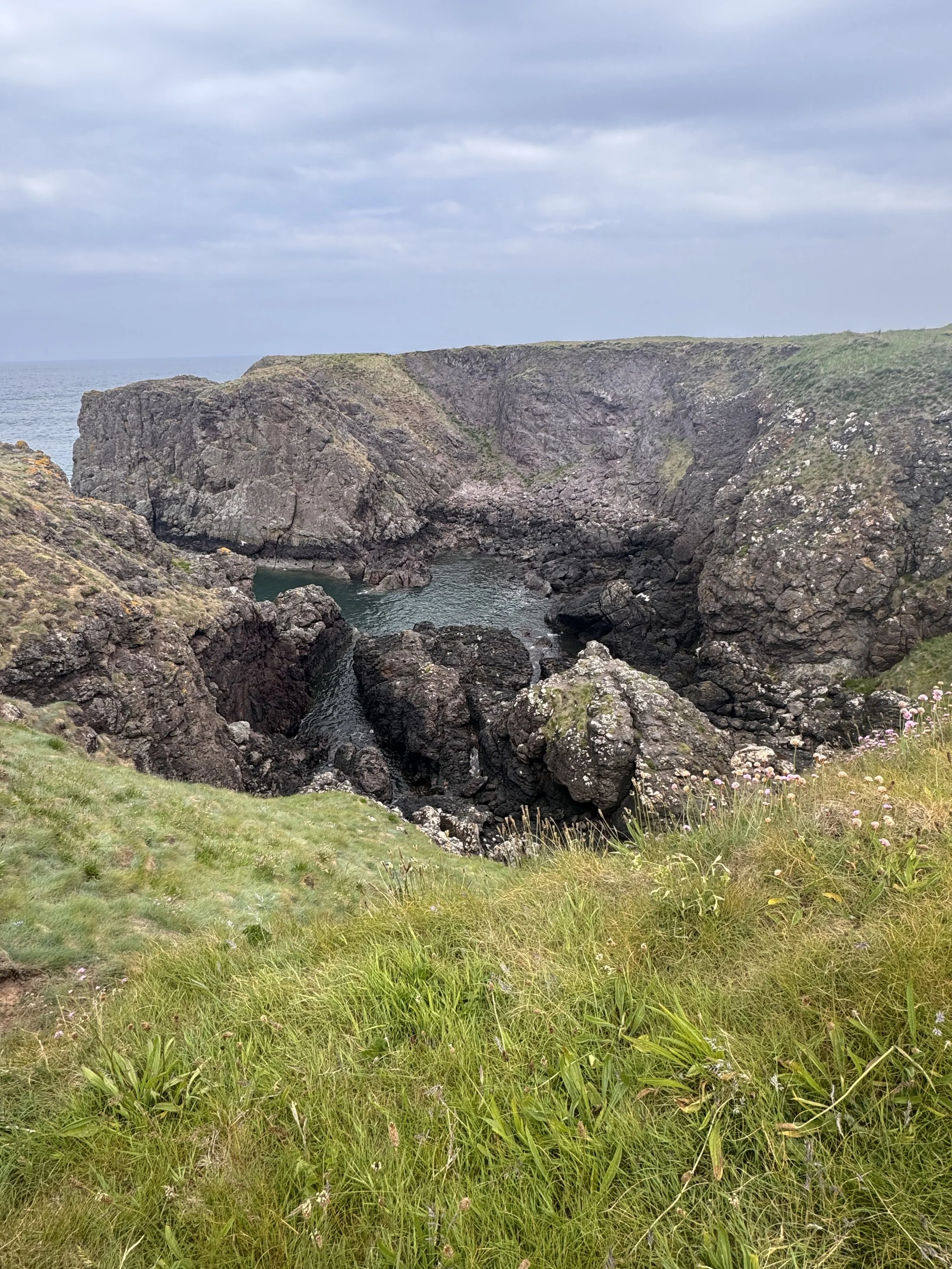
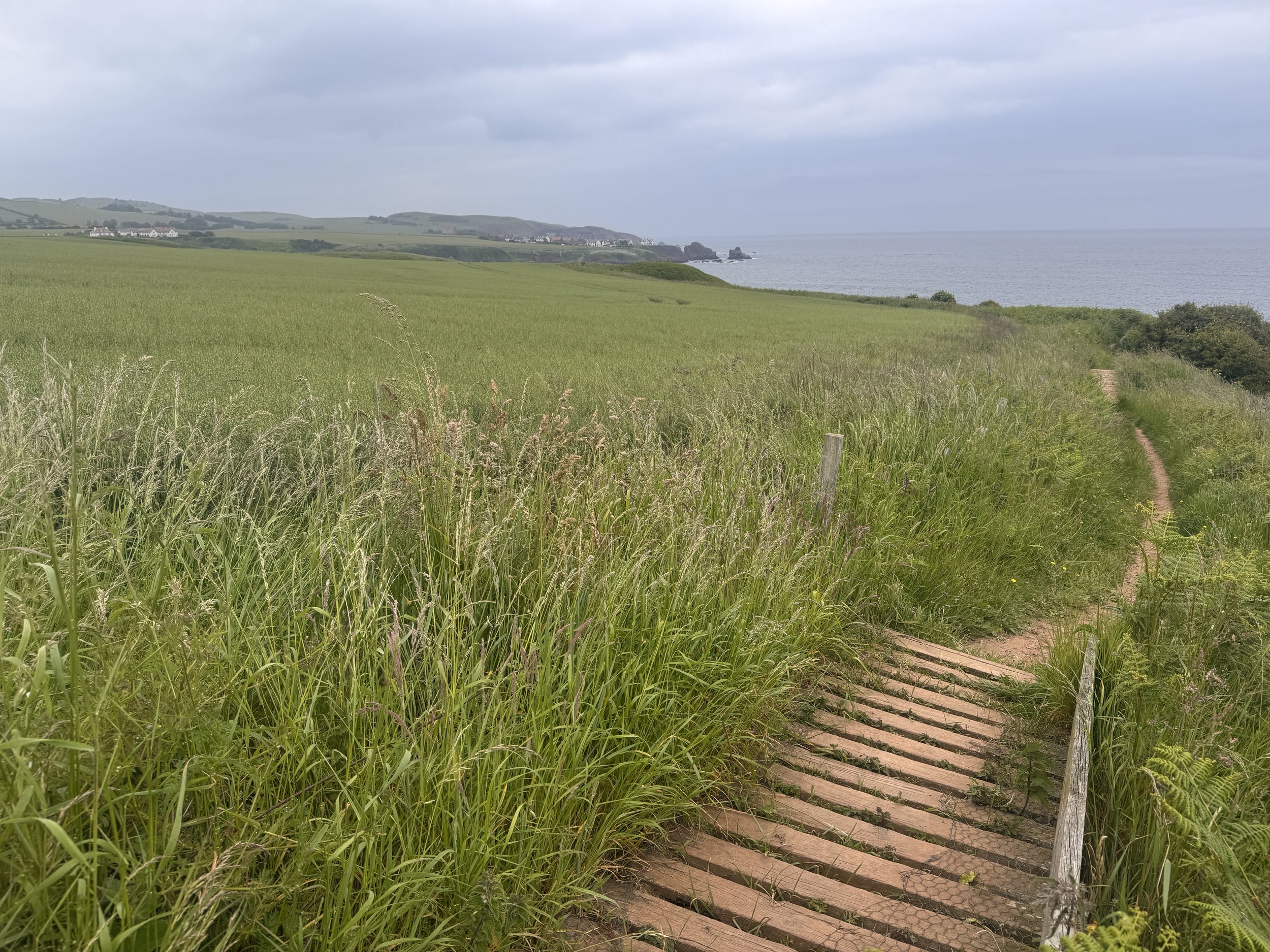
The first part of the walk wasn’t too fun, walking along a caravan park, agricultural fields, beside the mainline train tracks (I kept jumping at the trains zooming by, you’d think I would have adapted a bit!), but the sea was always out there on my right. And eventually, as I slowly ascended up to higher cliff tops, the views and rocky outcrops grew more spectacular. The path undulated gently, but the air was very breezy and the surf was roaring. It was all quite dynamic and powerful. I passed the small, quaint harbor at Burnmouth, and climbed back out of it to the cliffs again. This is a beautiful coastal walk, and the path is generally well maintained and very well signposted. There are areas where you are close to the edge, but it feels secure. Or, I’m just getting better at sticking to a narrow path and not looking down too frequently.
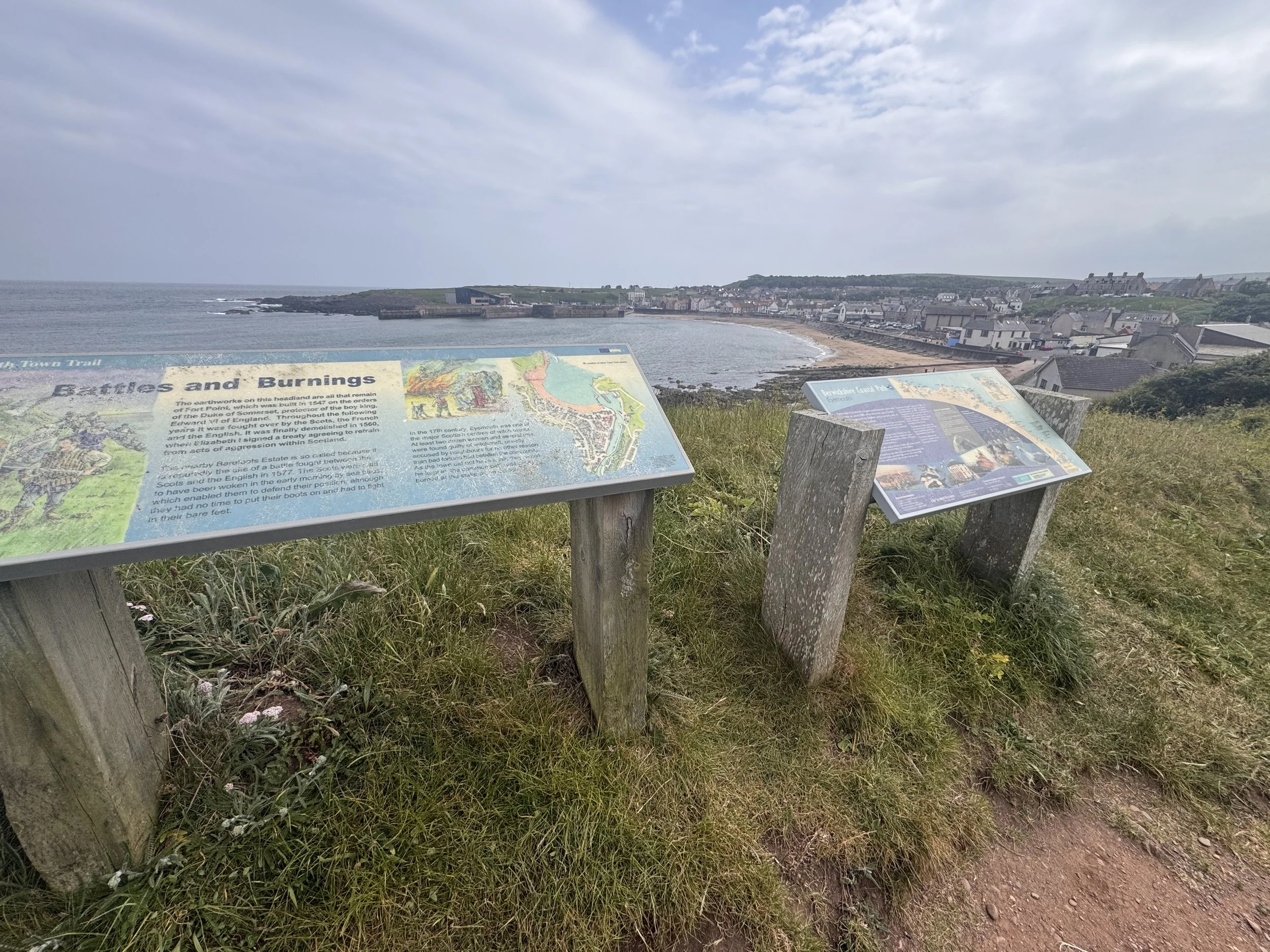
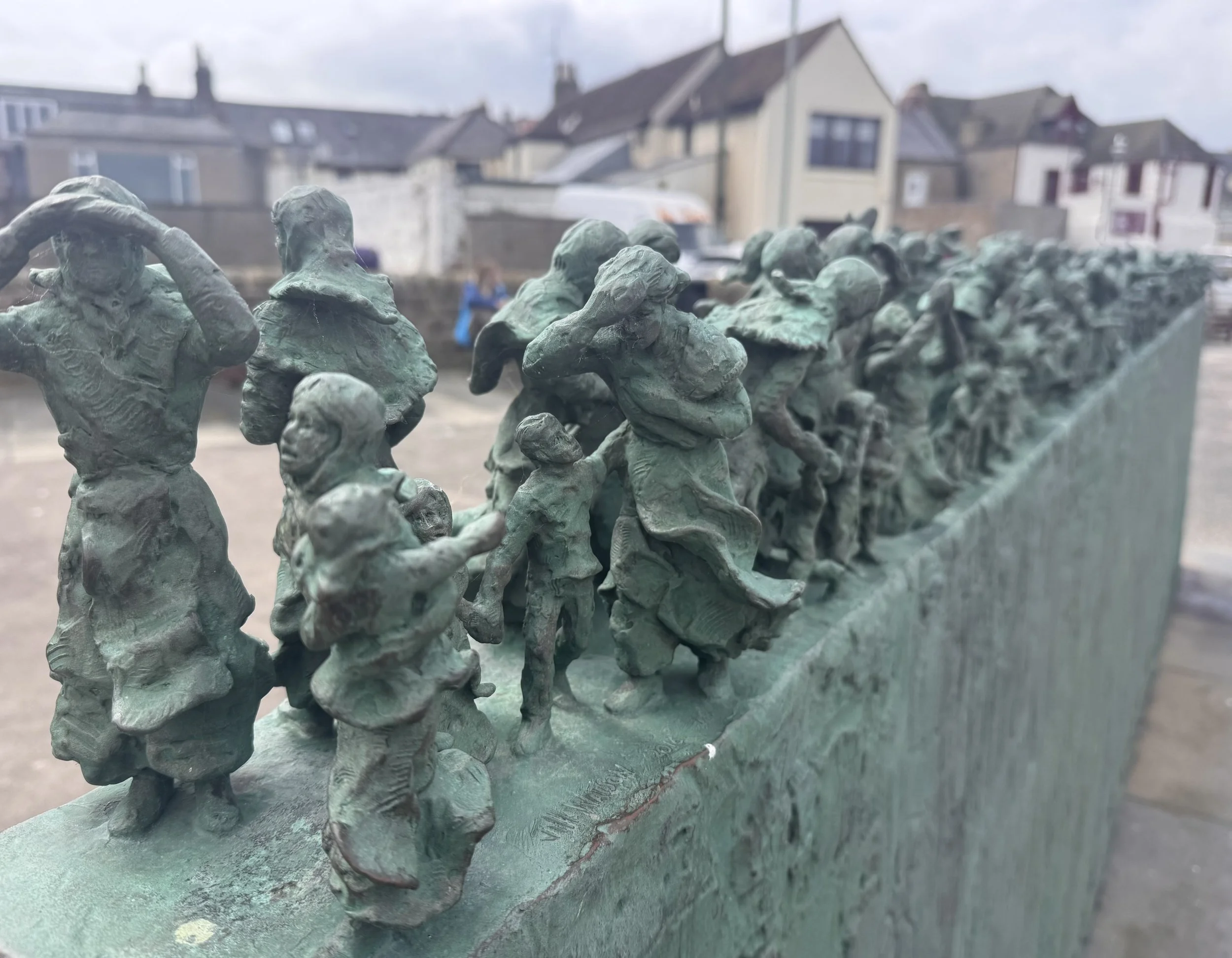
After passing its golf course (I’m beginning to understand the Scottish passion for golfing - after all the sport was created here - and there are golf courses EVERYWHERE. Each small community seems to have one), I came to the large port of Eyemouth. There were grey seals floating around, mute swans and cormorants sharing space, and a large building for an offshore wind company. There was also one of the most beautiful and heart wrenching sculptures I’ve ever seen. The art piece is actually spread among five villages, the largest is in Eyemouth. It was completed in 2018 and remembers the families of those left behind when in October, 1881, a storm took the lives of 189 men, leaving 78 widows and at least 178 children in the town. It is called ‘Widows and Bairns’, and each figure represents a real person. The artist did an immense amount of research, and each family unit is placed above the name of the ship that their family was on. It shows the shock, pain, despair, and eventual resignation and resolve in their faces over the three days the tragedy unfolded. It is the largest Scottish fishing disaster ever. https://youtube.com/shorts/2ubg_hxzjxs?is=_88kqscqLB1CE7Zl
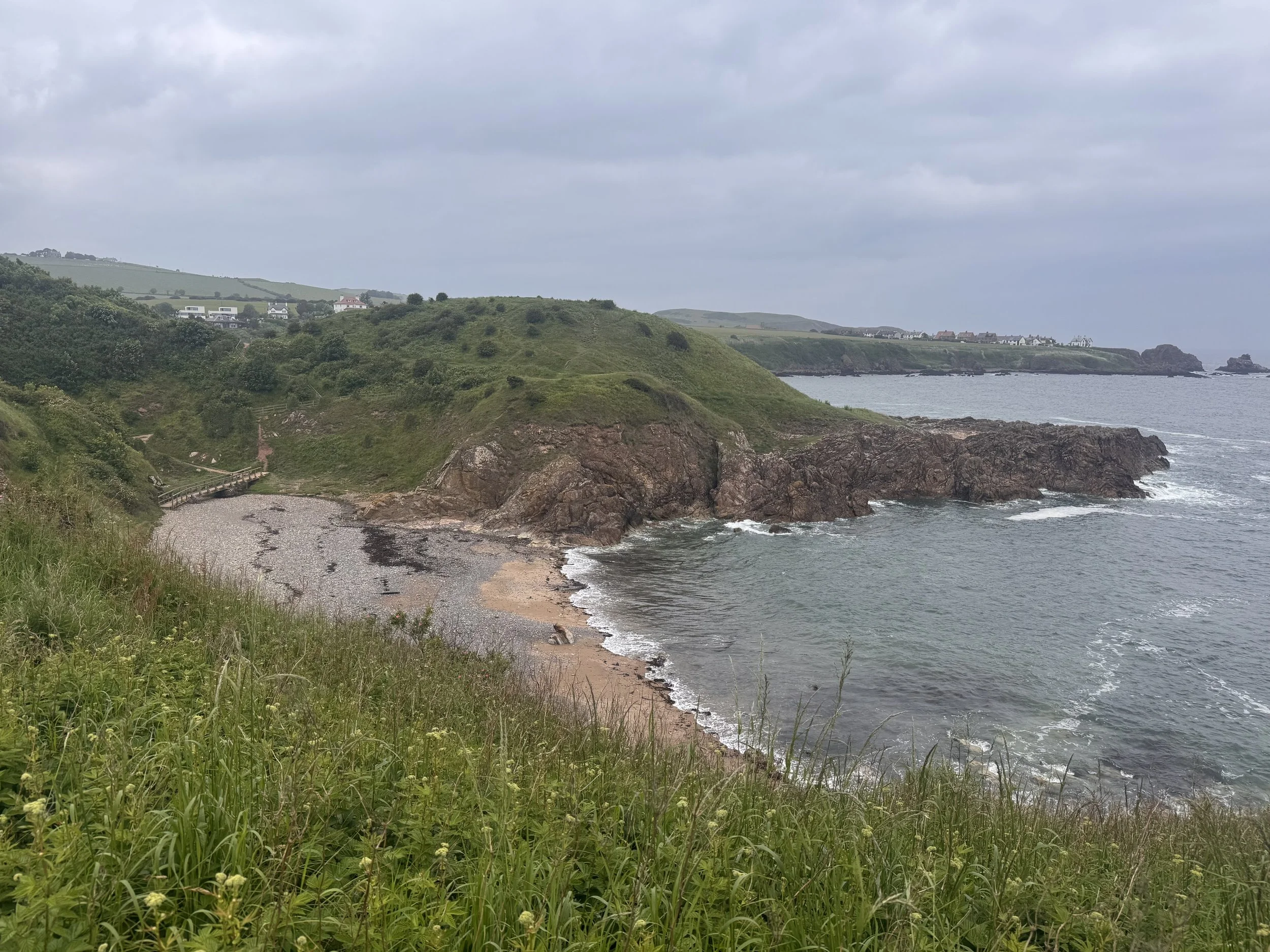
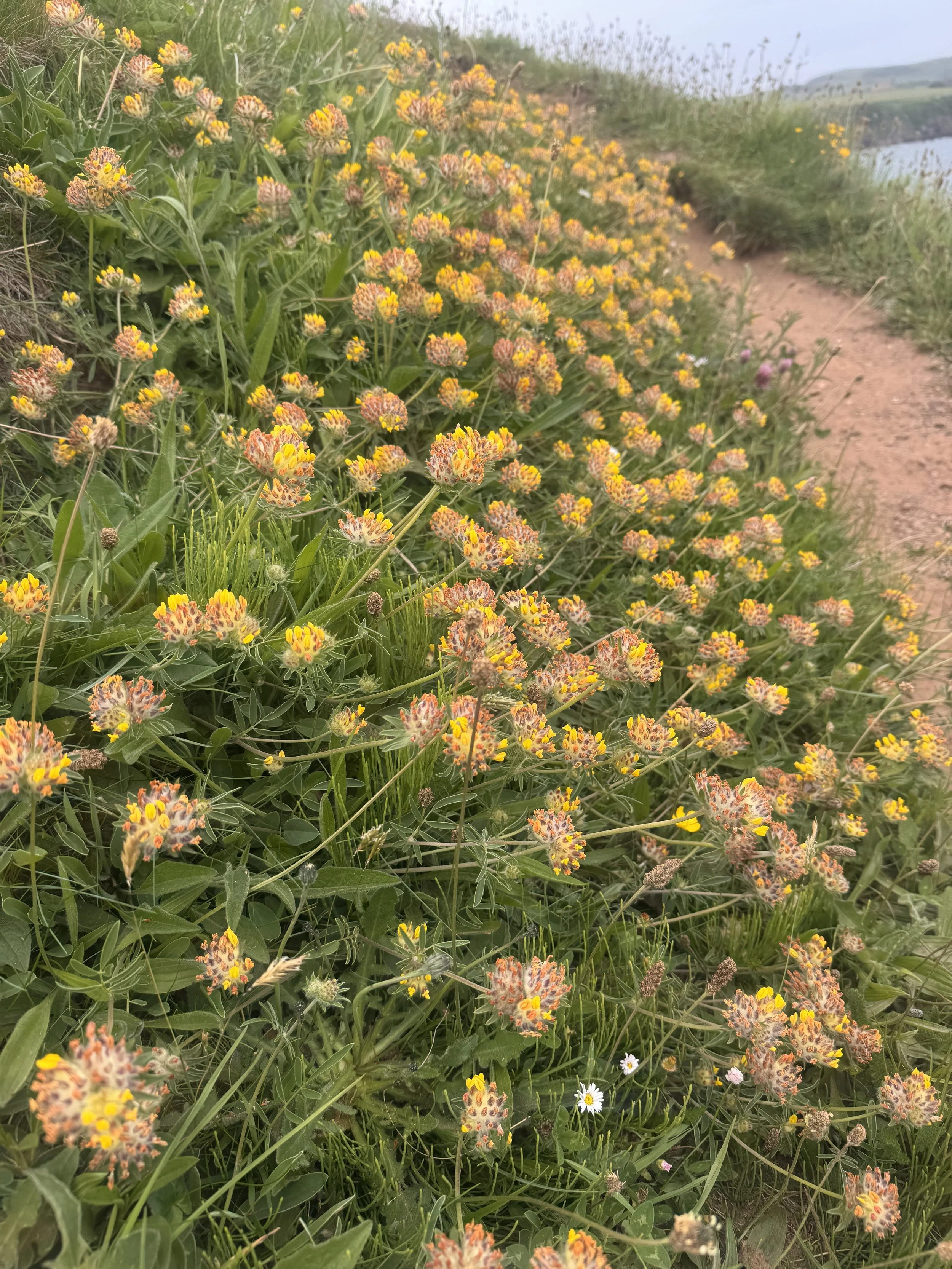
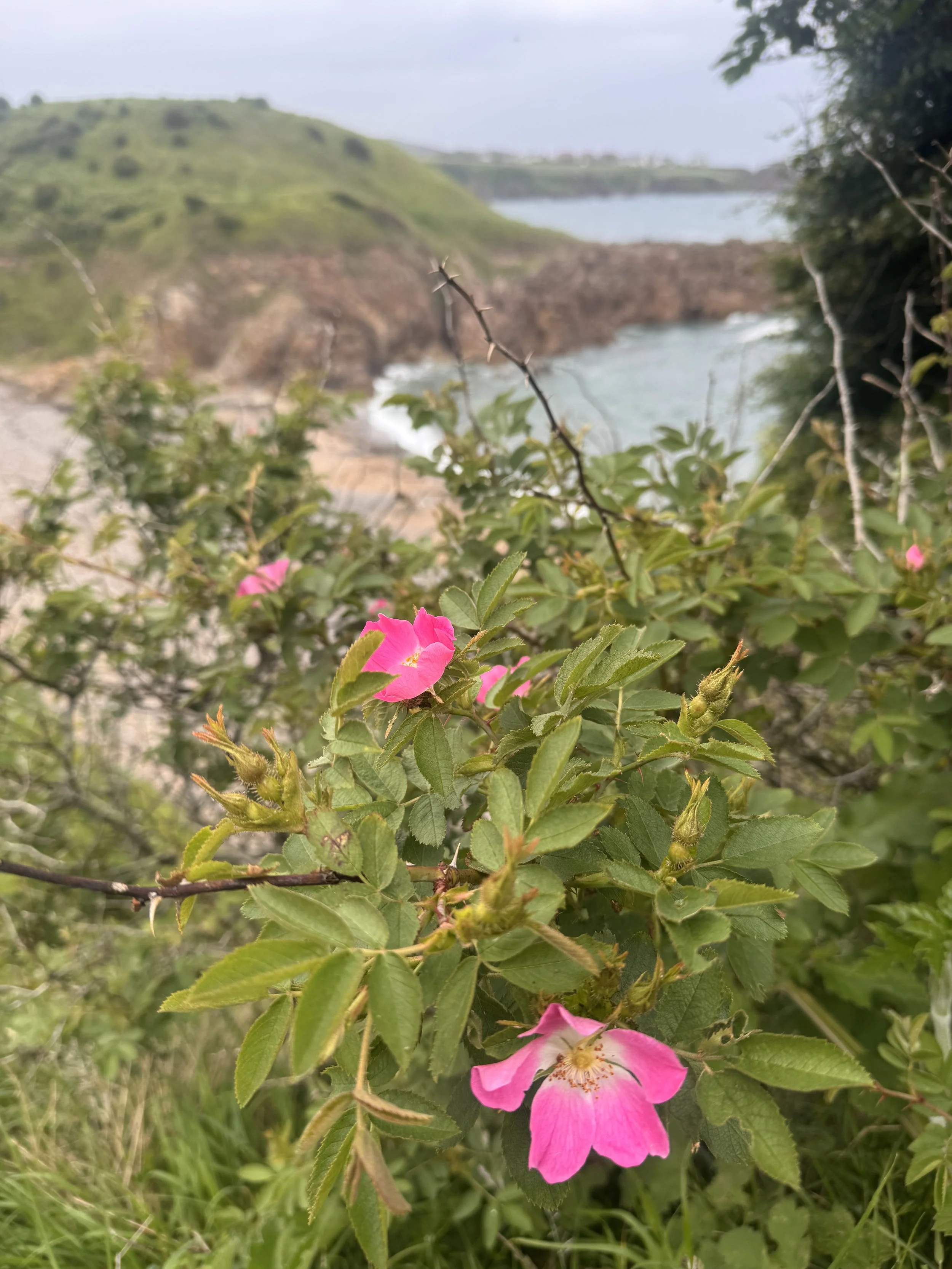
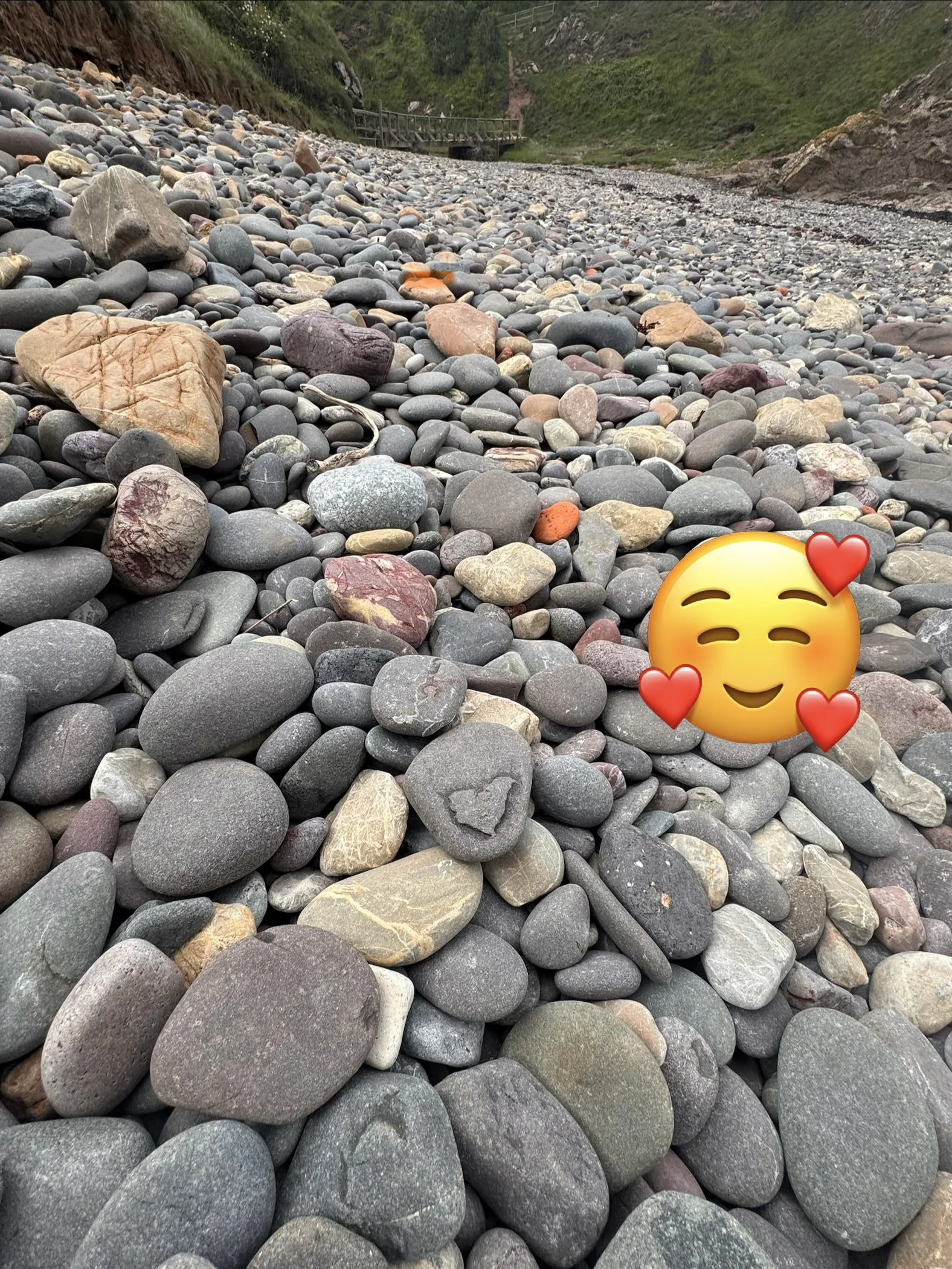
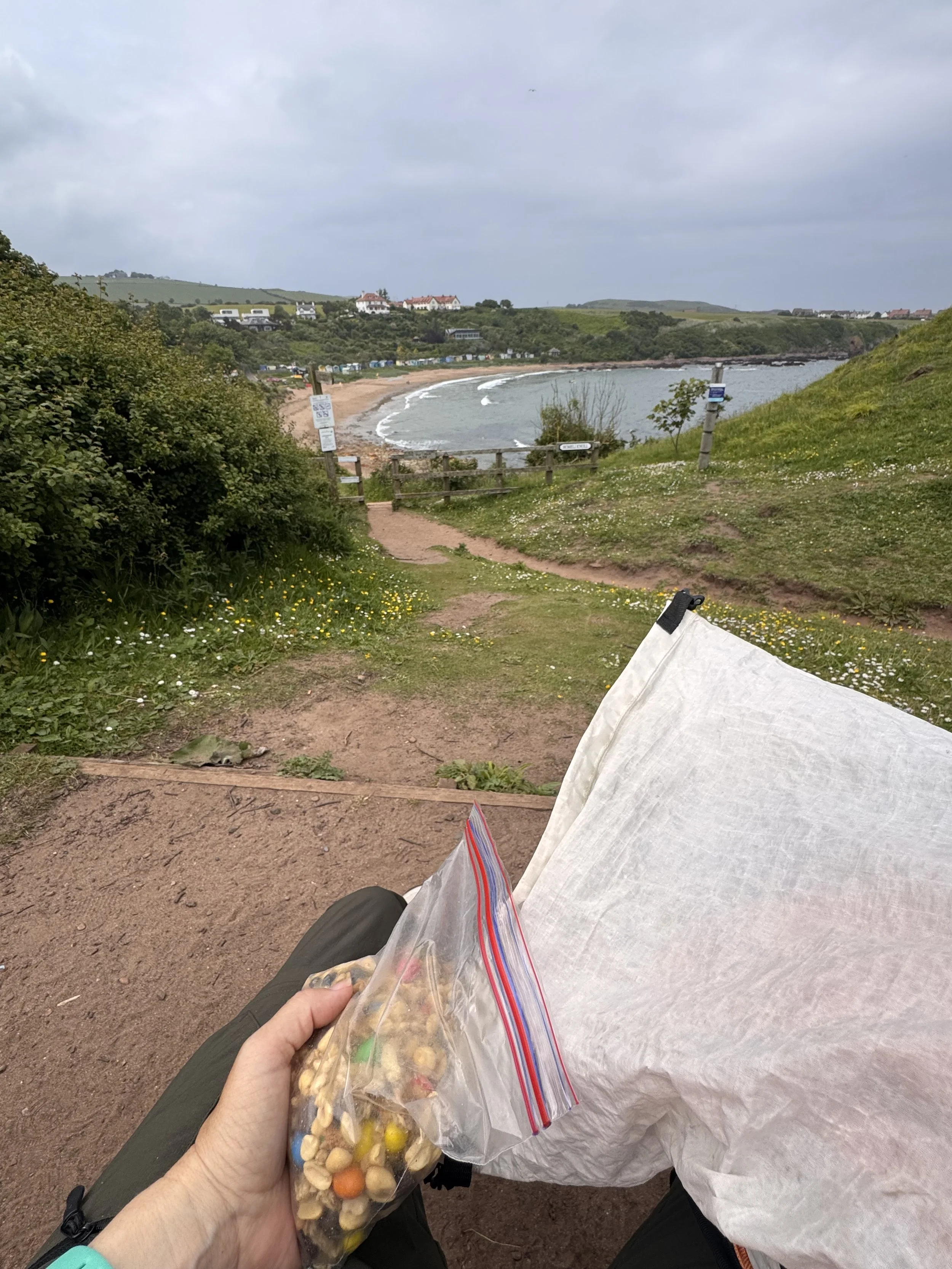
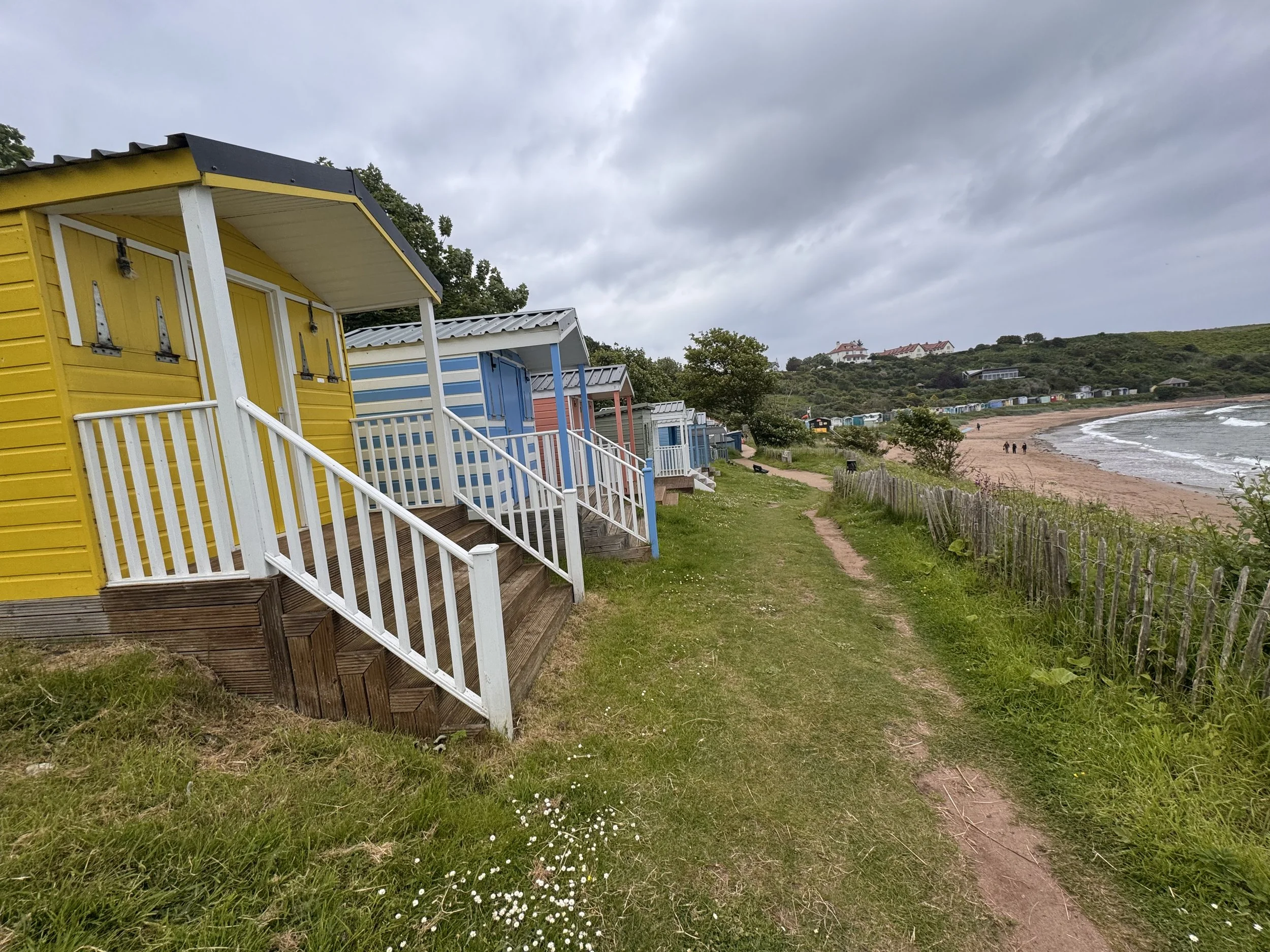
After sitting for awhile to absorb that, I walked up to the next cliff, looking at the waves and the rocky shore with a new perspective. Pretty flowers and dog walkers lifted my mood, and the path eventually turned down a ravine to cross over a burn (creek). A long sandy beach was followed by a very overgrown path up and over a short crest, and then down again to a pebbly beach. And of course the sign of love that has followed me on this whole journey was there among the rounded, multi-colored stones. Across a short bridge and thankfully up a staircase for the next climb, and then I finally came to the hill looking down on Coldingham Shores. There was a very cool stand to put your phone in and take a photo, sending it off to the local authority to enable them to best study how the coast is changing. I saw another one of these back in Berwick. Clever use of people out strolling with technology in their hand! I ate my lunch on a well-placed bench, then walked to the beach. There were colorful beach huts and surfers, and a café. I didn’t linger though because I still had two miles to walk inland to my rest for the night, and I knew I had a medieval priory ruin to walk through.
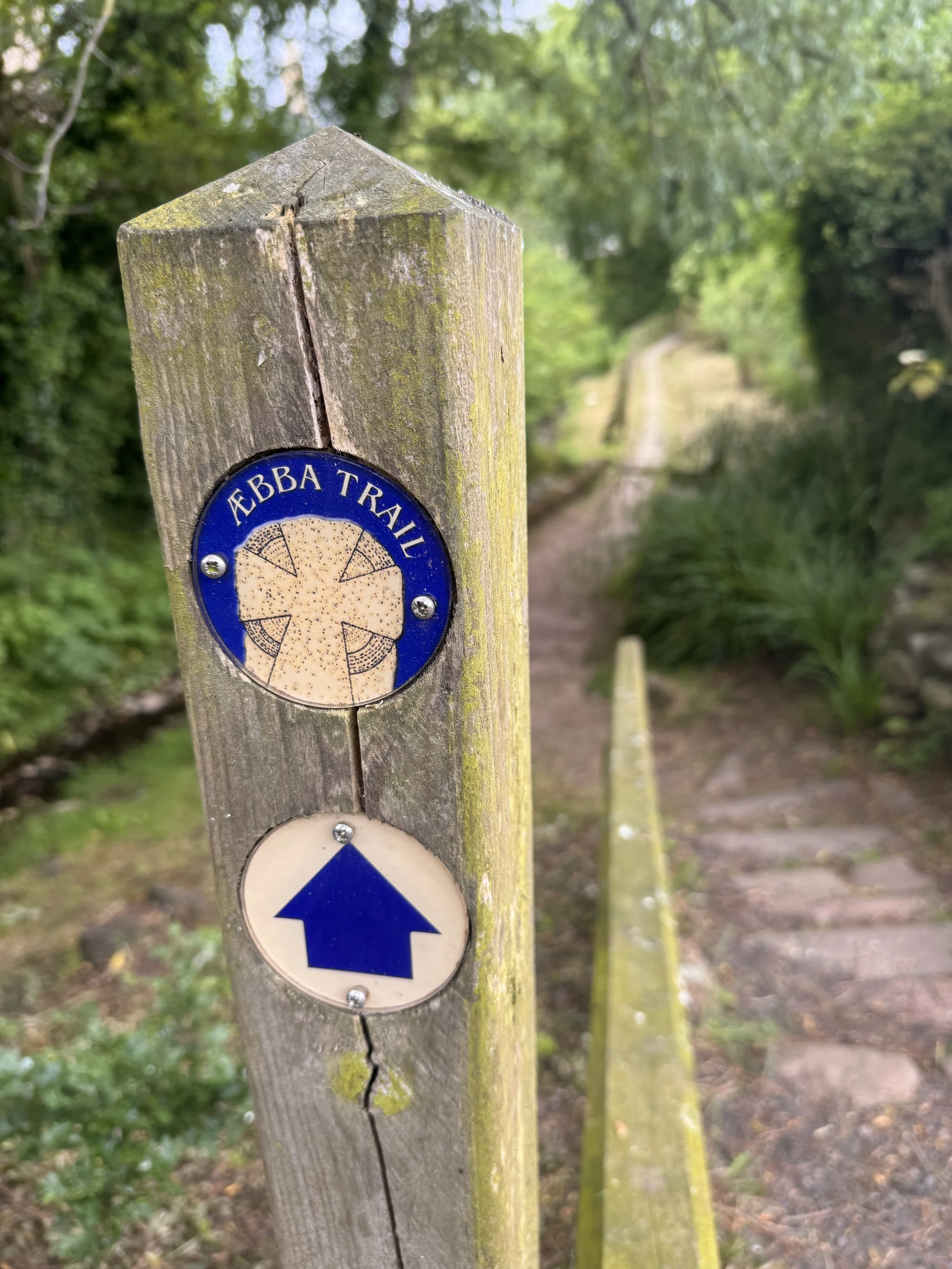
I reached the village by taking a shortcut along an ancient path members of a nearby nunnery would have used to travel between their coastal home and the larger priory. Medieval noblewoman, Æbbe, founded her community and she is still remembered fondly in the area. I love that her name uses the old English ‘æ’ dipthong. It is now a peaceful nature trail.
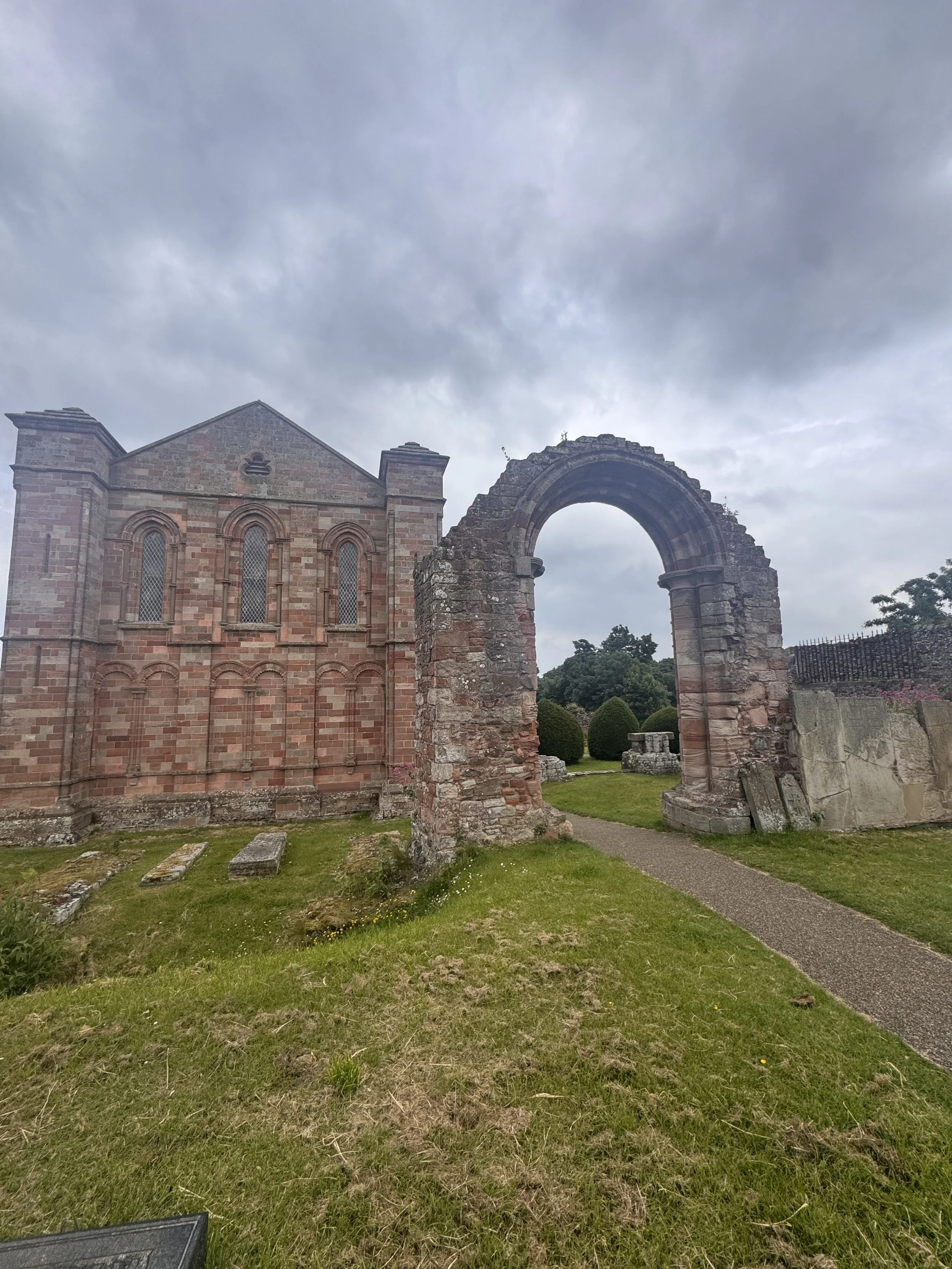
I walked through the old priory grounds; only an arch is left because Oliver Cromwell’s soldiers blew it to pieces while extracting a few royalists hiding inside in 1653. The Victorians used the rubble to build a parish church two centuries later. We are all just walking over the places of lives lived before us. Sometimes, if I’m quiet, I think I can sense those feet that stepped here before, centuries ago. Different drama, different clothes, different languages, different pleasures, but still just people who walked the best they could through their days in this place.