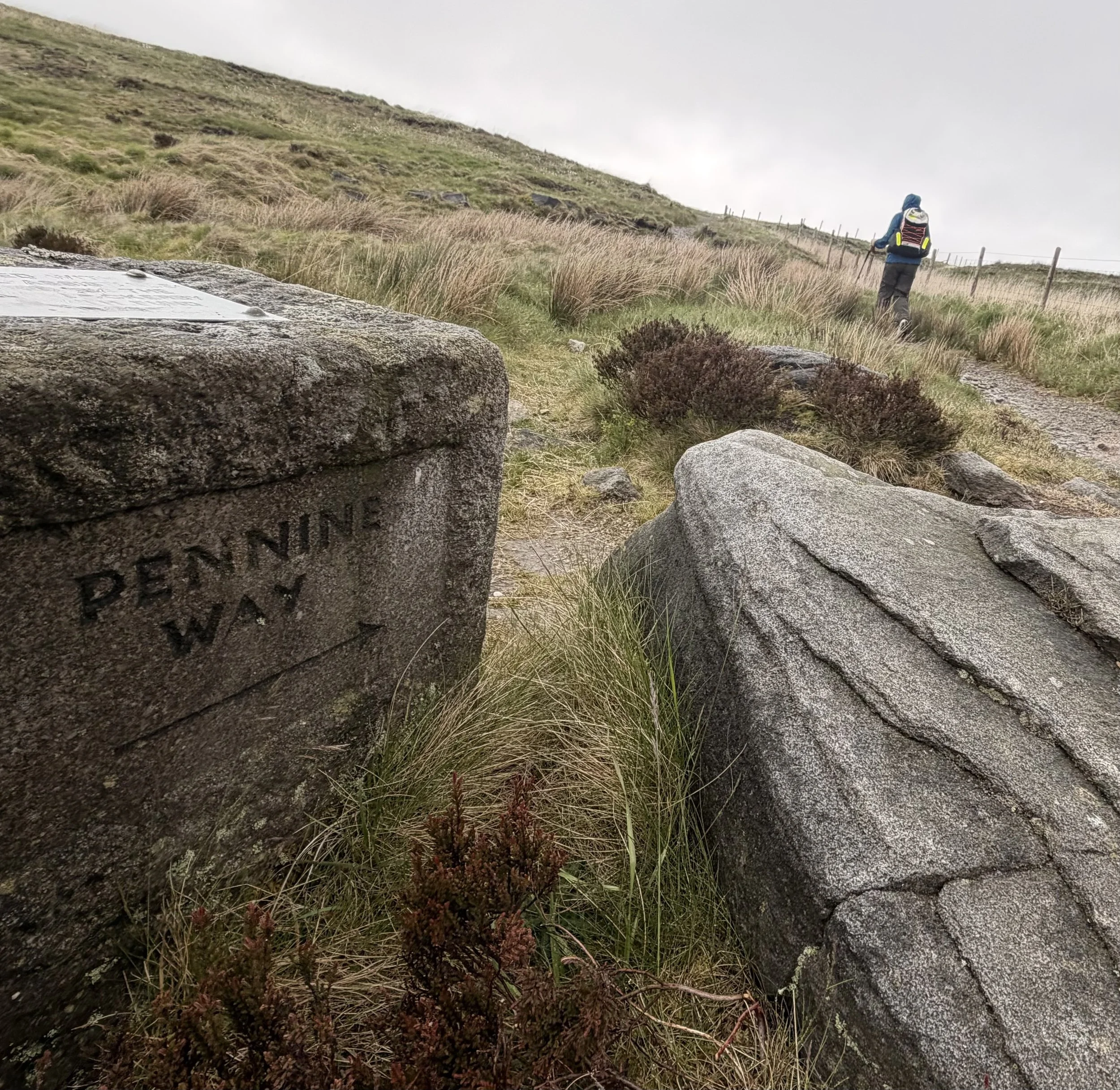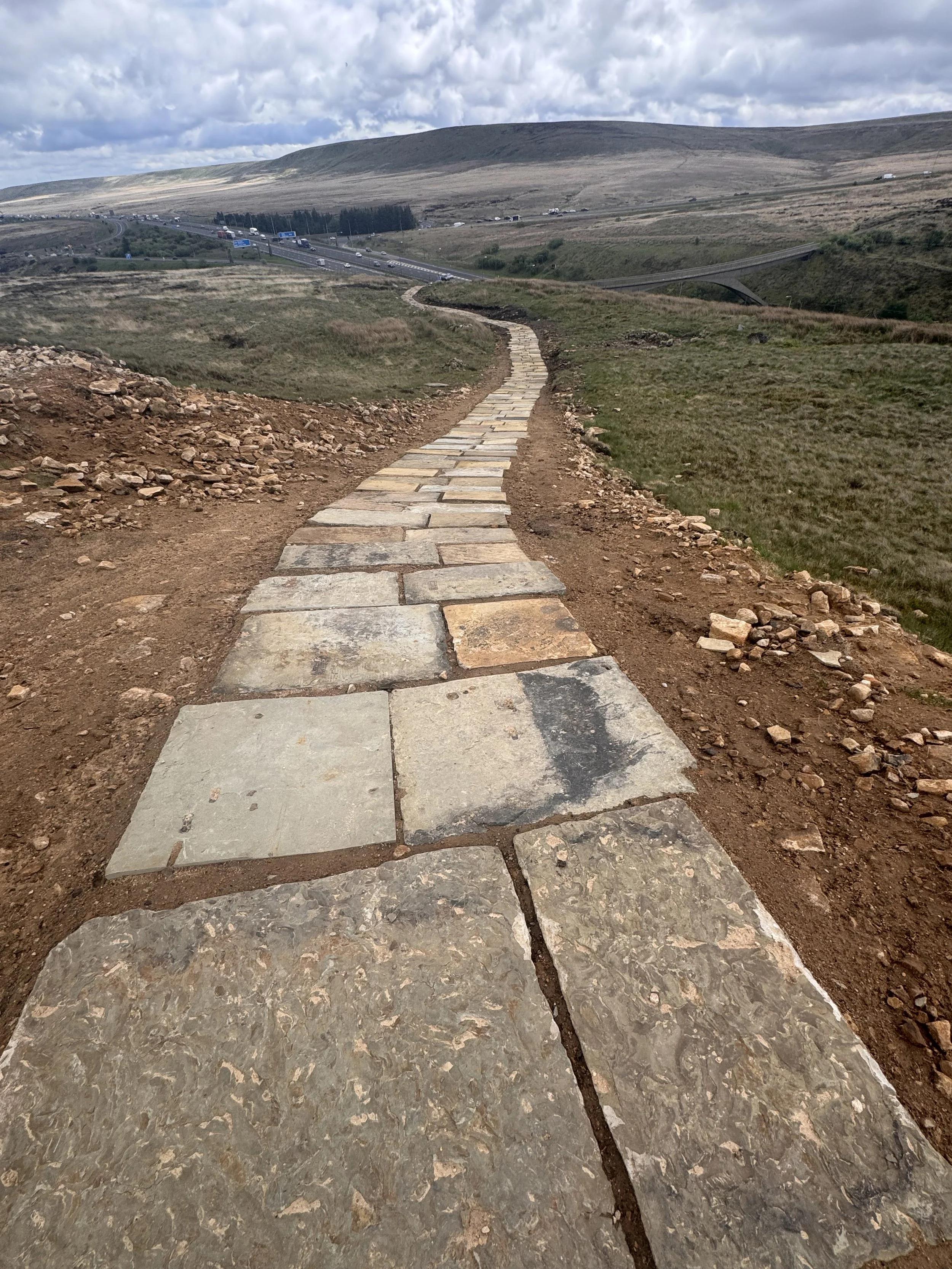
Today was an easier one. Longer, but easier. It felt a rather flatter route, with long gentle ascents to a total of 1,079ft over the 15.8 miles we walked. All good because my energy was minimal from the very beginning. It wasn’t supposed to rain today, and it did just about hold off. Only a few sprinkles right at the end of the day. The ground wasn’t too boggy, and there had recently been new flagstone pavers laid so things were much dryer. I had hoped this would be the case so I had put on my non-waterproof shoes. They are easier on the feet, but the increase in mileage is definitely a challenge to hold off more blisters developing. I don’t understand how I avoided them for the first 4 weeks?! I’m just crossing my fingers everyday now.
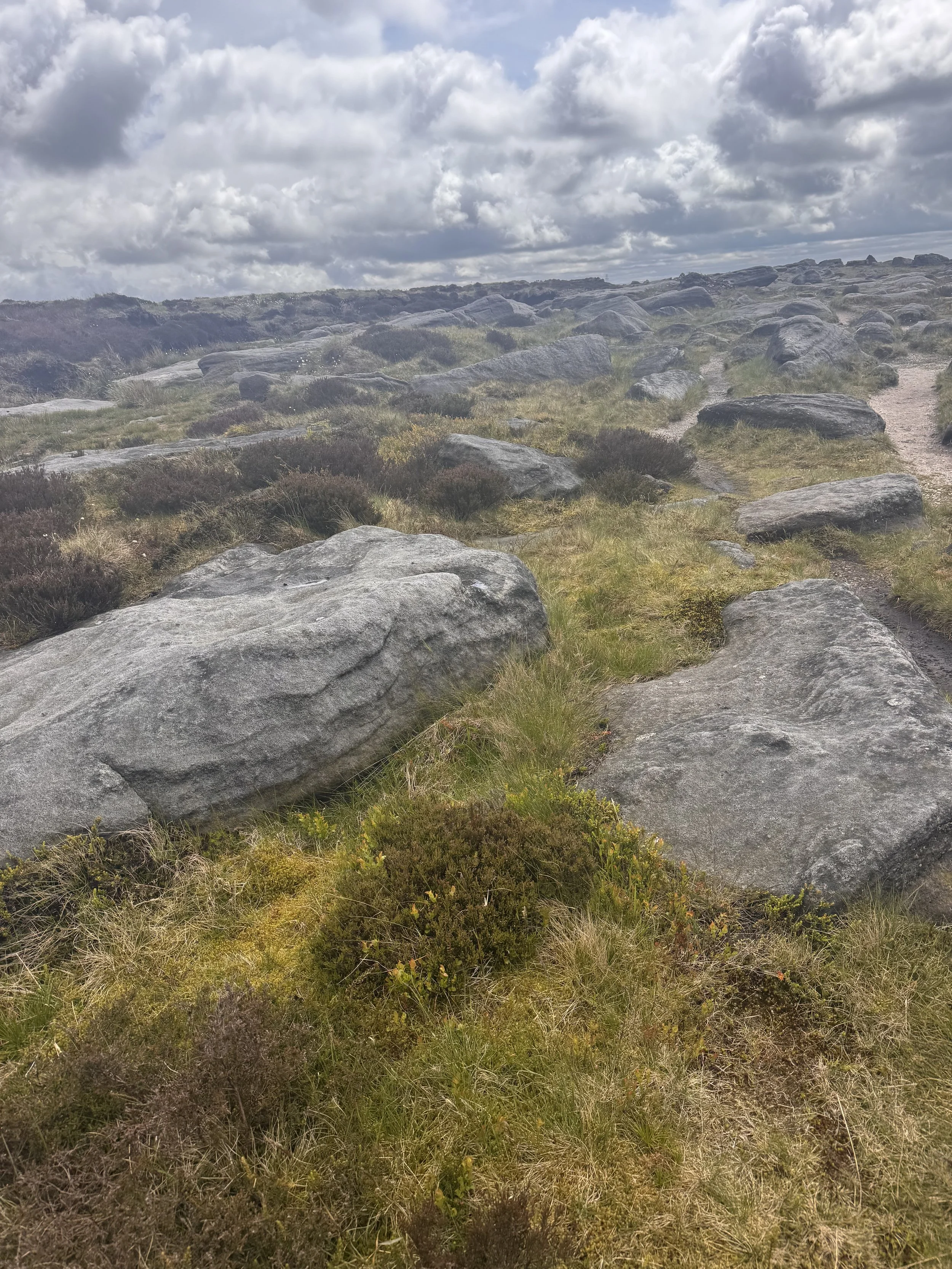
We hit some big rocks to negotiate around pretty early on as we walked along a ridge for a while. Sometimes it was better to climb up on top and use the rocks to avoid the lingering puddles obliterating the trail. The tall, clustered buildings of far off Manchester were a constant reminder of how little we’ve actually traveled over the last three days. We just can’t seem to escape sight of the big northern city. This is definitely slow travel, and i like it, but sometimes it’s nice to see progress.
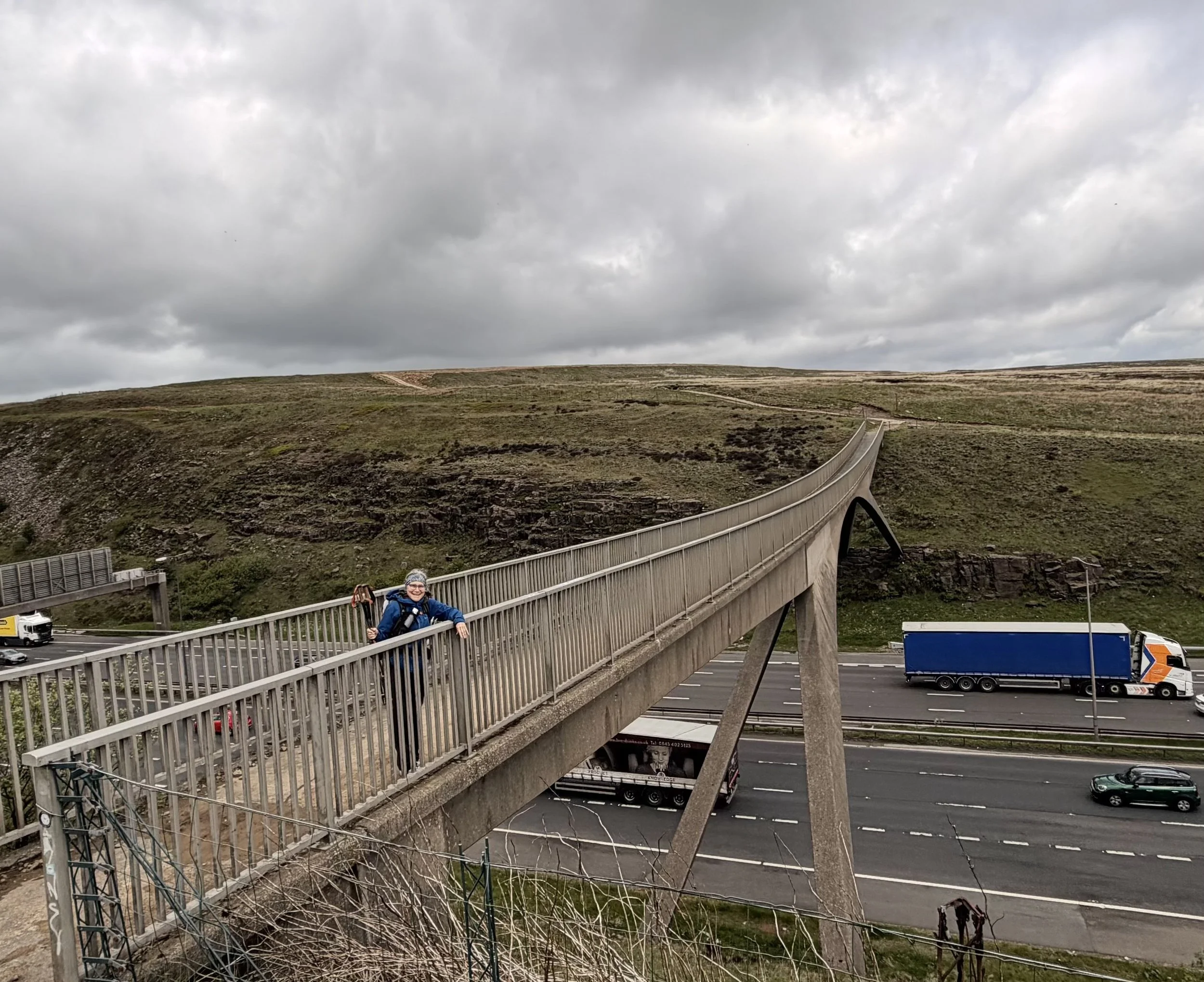
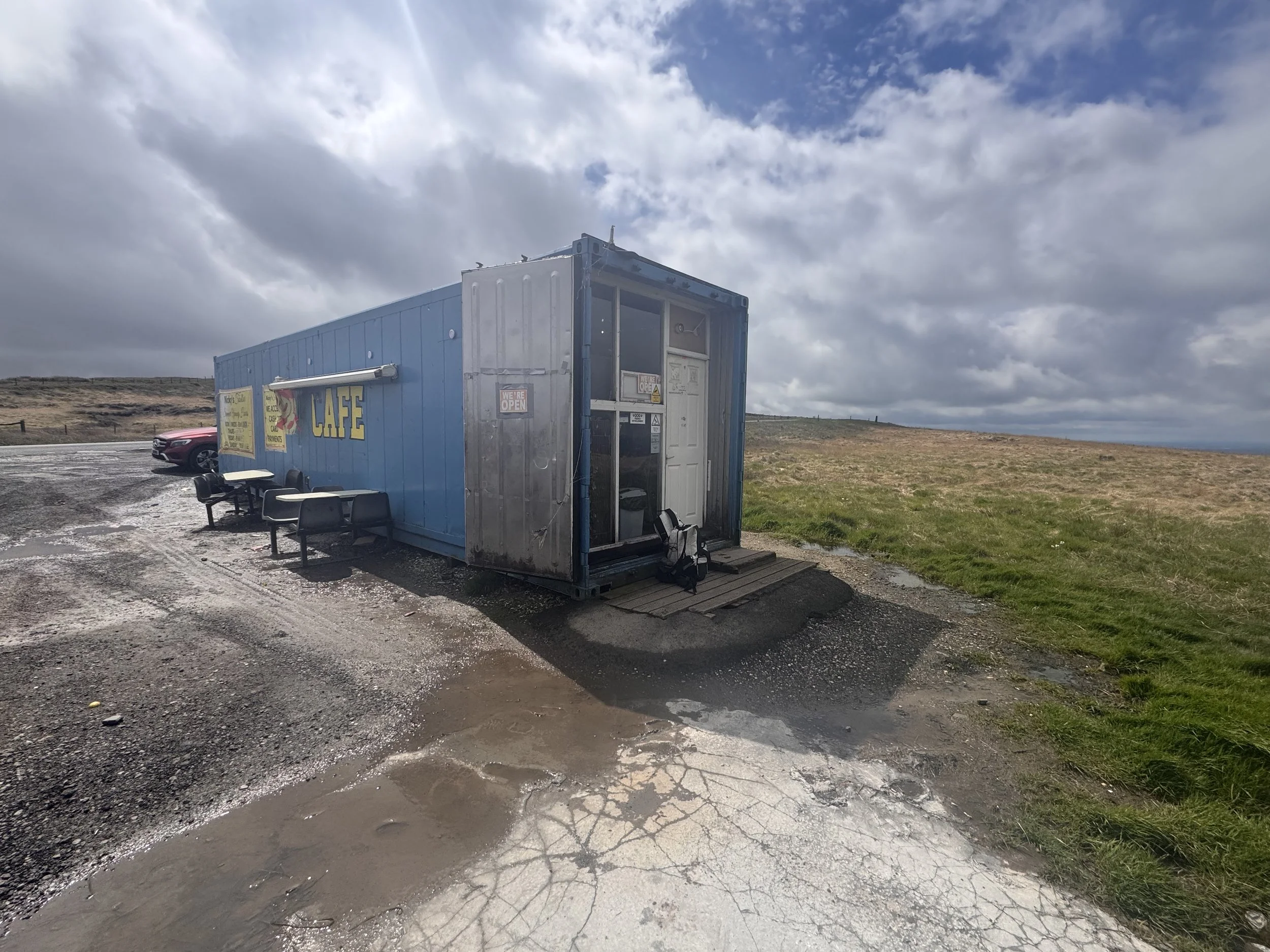
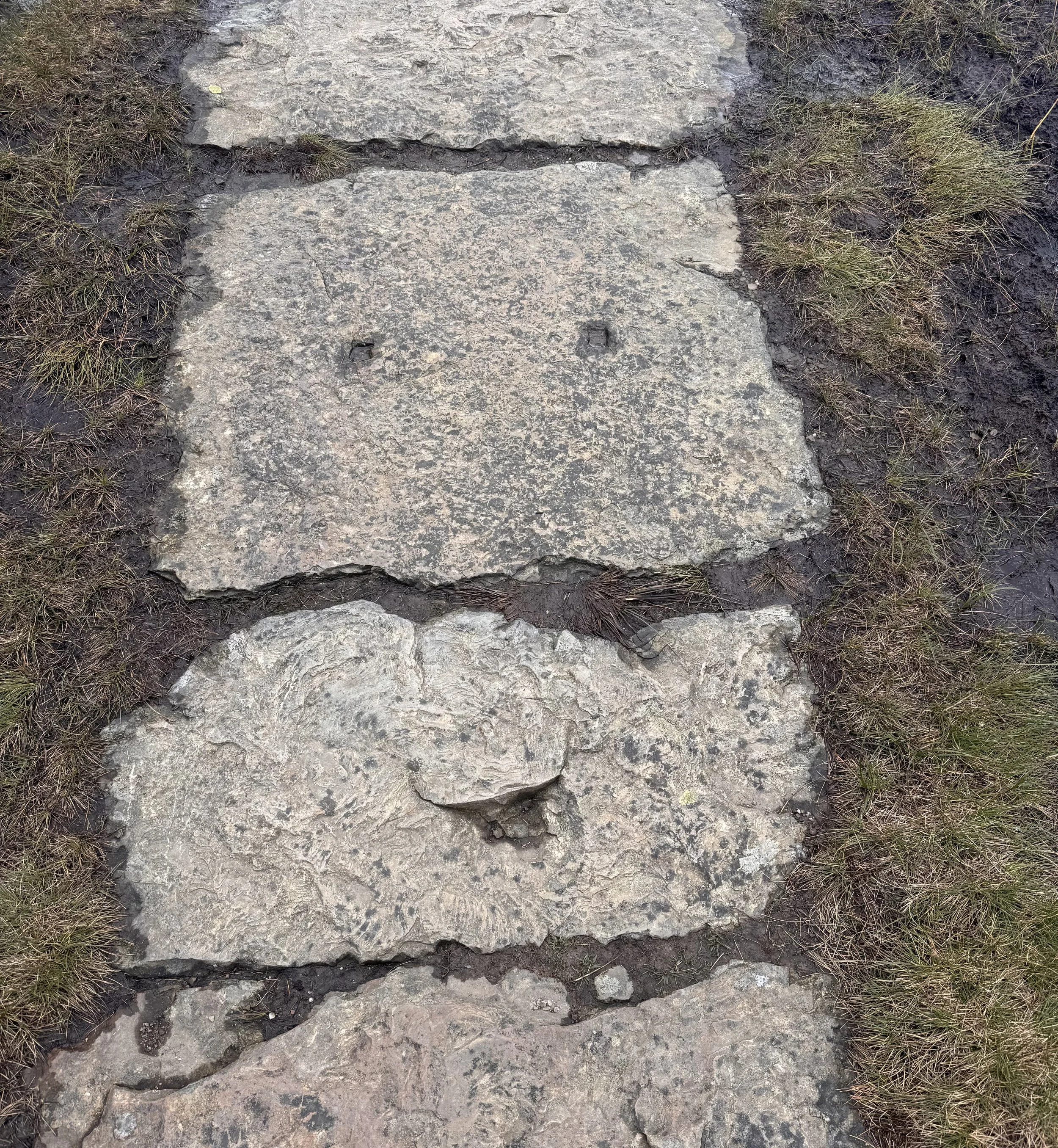
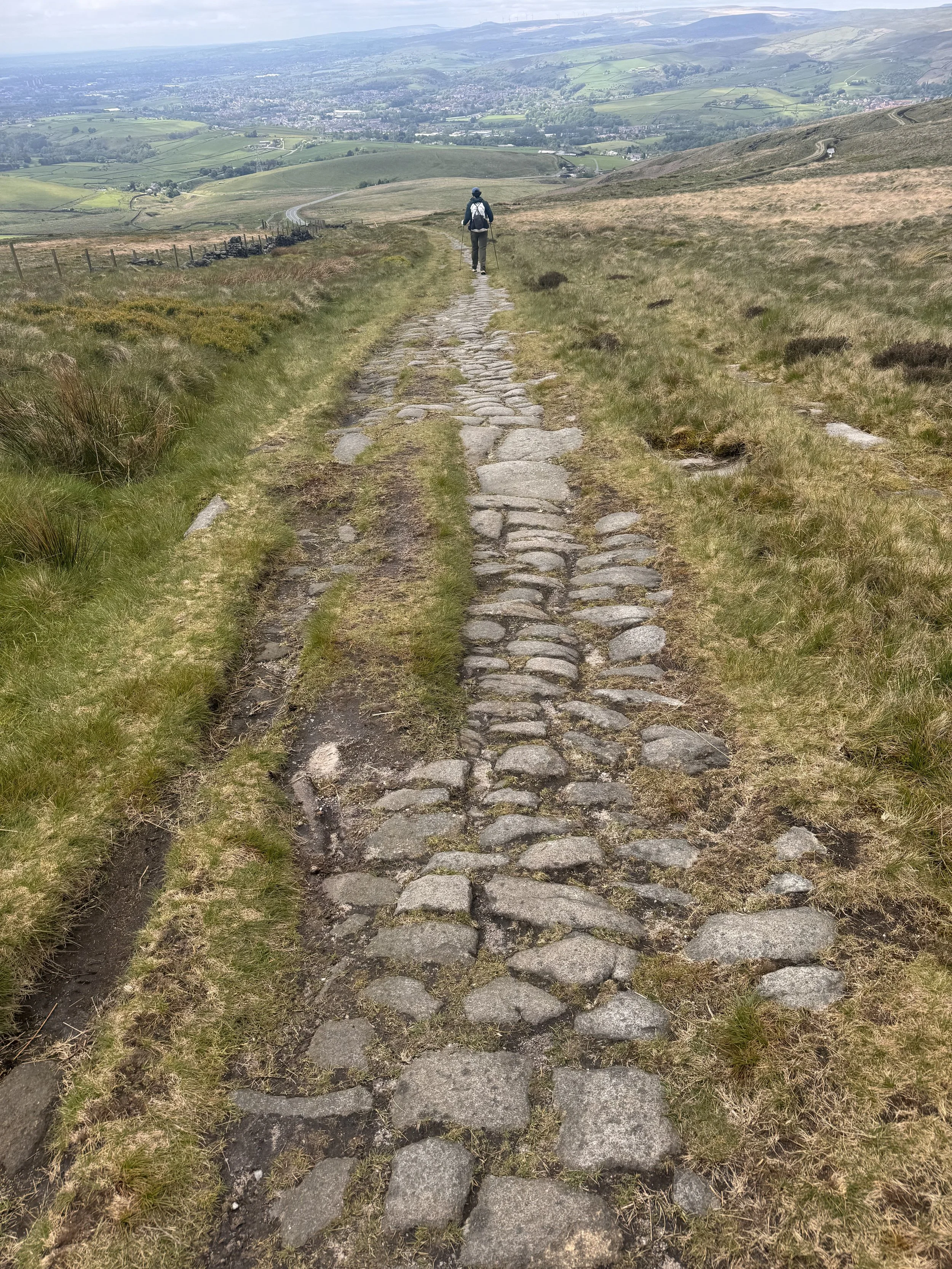
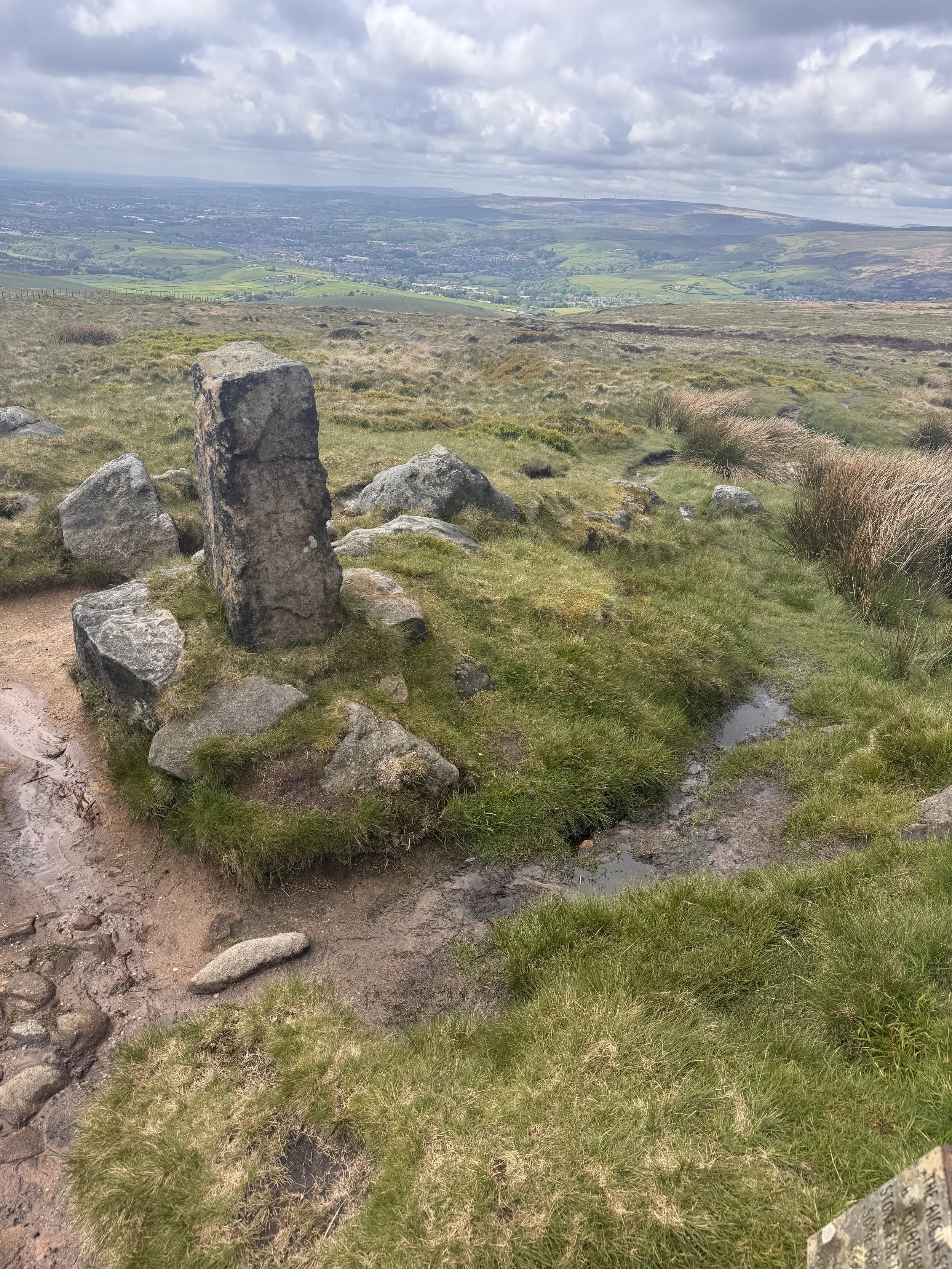
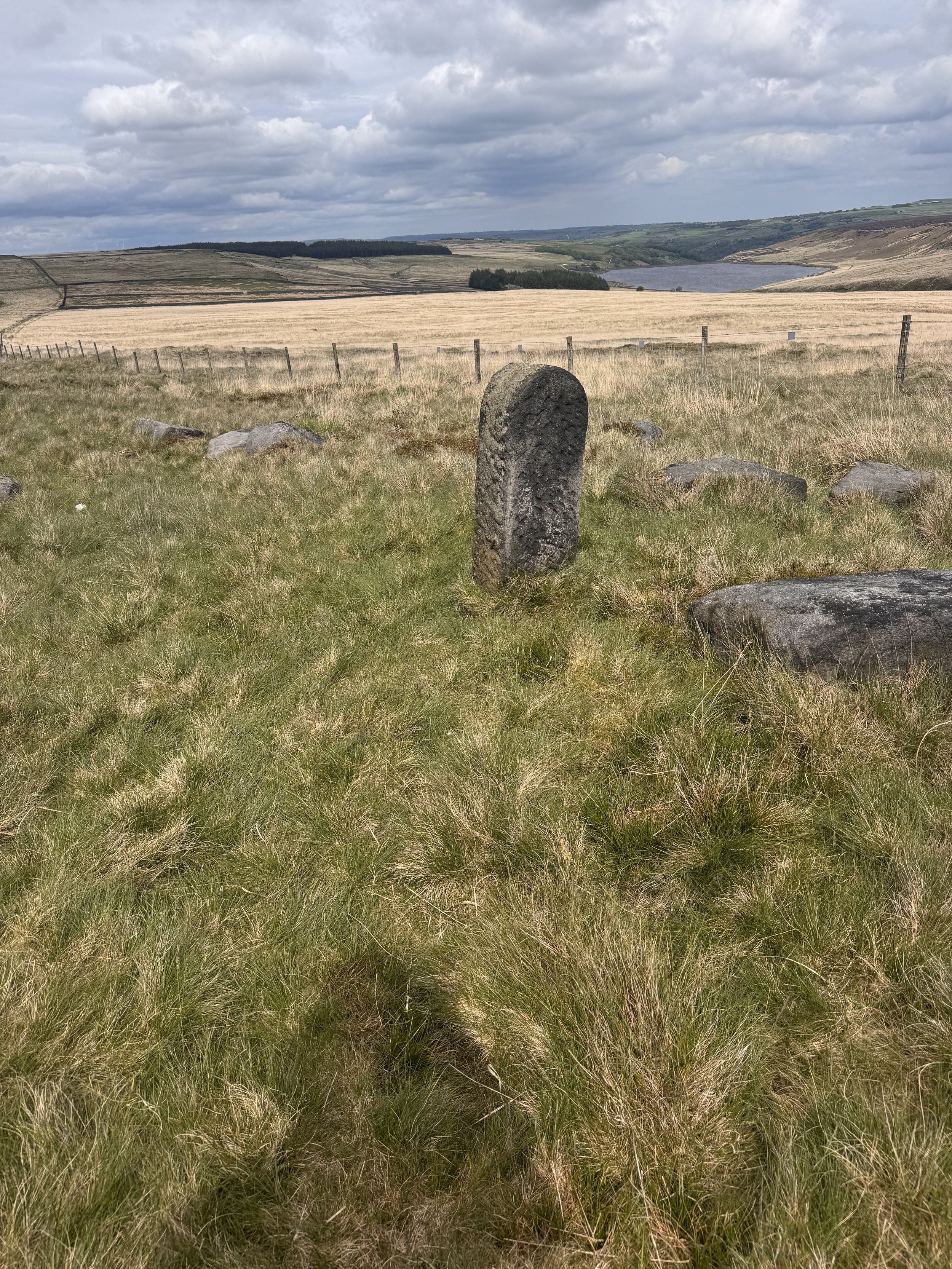
We eventually came off the ridge line and crossed a road, and happy surprise - there was a café in a container. Quirky, but welcome break for a second breakfast. We sat talking to some local fell runners for too long probably, but their stories of running the Pennine Way in days, over night and in the winter were fascinating. Back on the trail, it wasn’t long before we came to the M62 pedestrian bridge. Then, up we climbed along Blackstone Edge, passing over more pavers with delightful faces and hearts to make all the looking down in order not to trip much more interesting, The path took a sharp left onto an ancient and extremely well-preserved Roman road. Half of it is under the moorland plants now, but you can still see the drainage ditch in places that ran down the middle of it. It had to be wide enough fot 4-6 soldiers to travel side by side as they marched between forts at Manchester and York. Marking an intersection of tracks crossing the stone road was the 13th century medieval Aiggin Stone, a way marker for later pilgrims, coffin bearers and tradespeople to rest and keep their direction certain. It is very odd and wonderful to be walking in the footprints of so many stepping here before us. It gives me a measure of hope of how things remain, despite how much they transform through the years. Both are true, and if we hold onto the reality that two seemingly opposite things can exist together, then there’s possibility that the black and white, either/or thinking that has gripped the current mindset might be broadened.
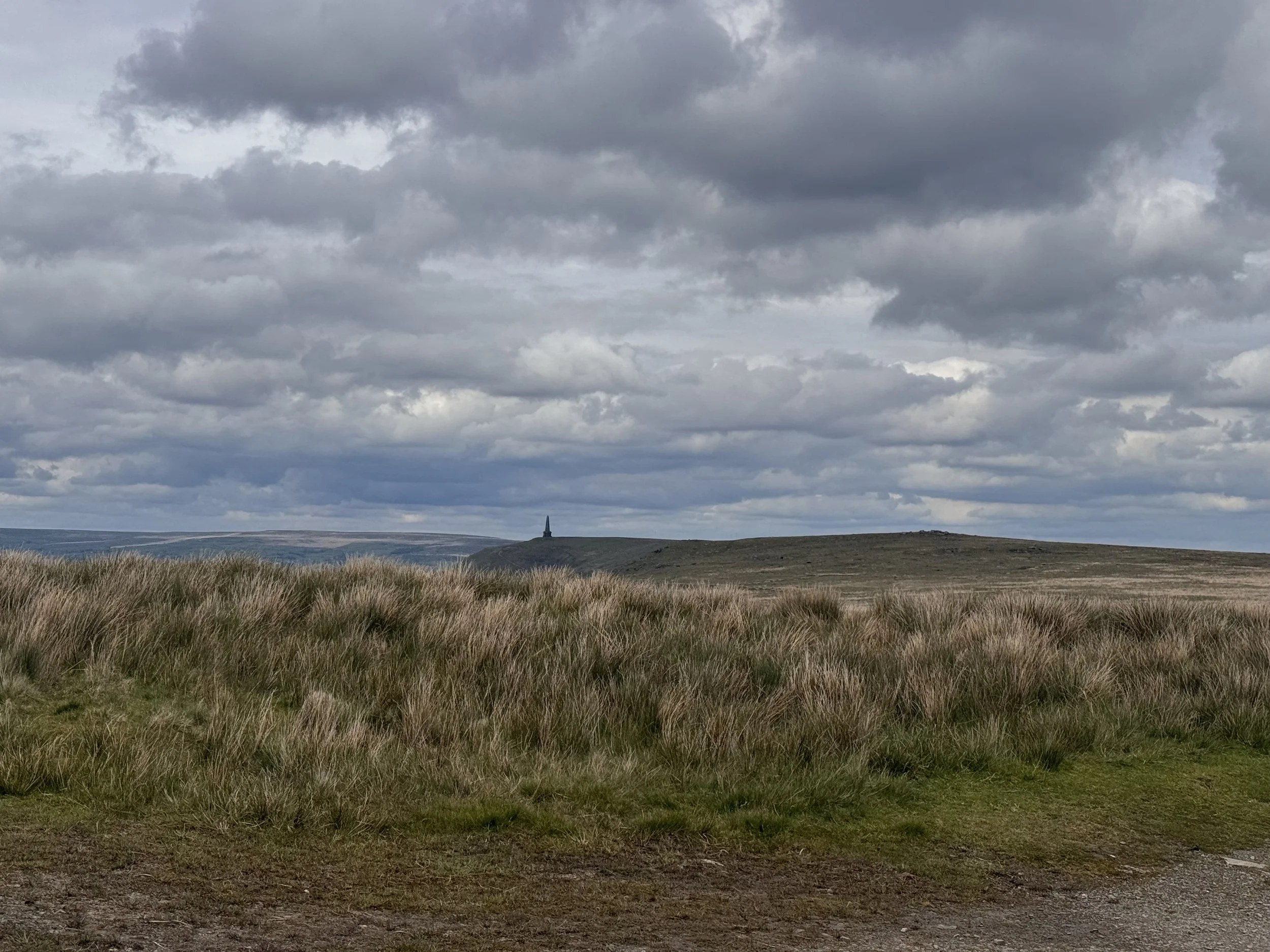
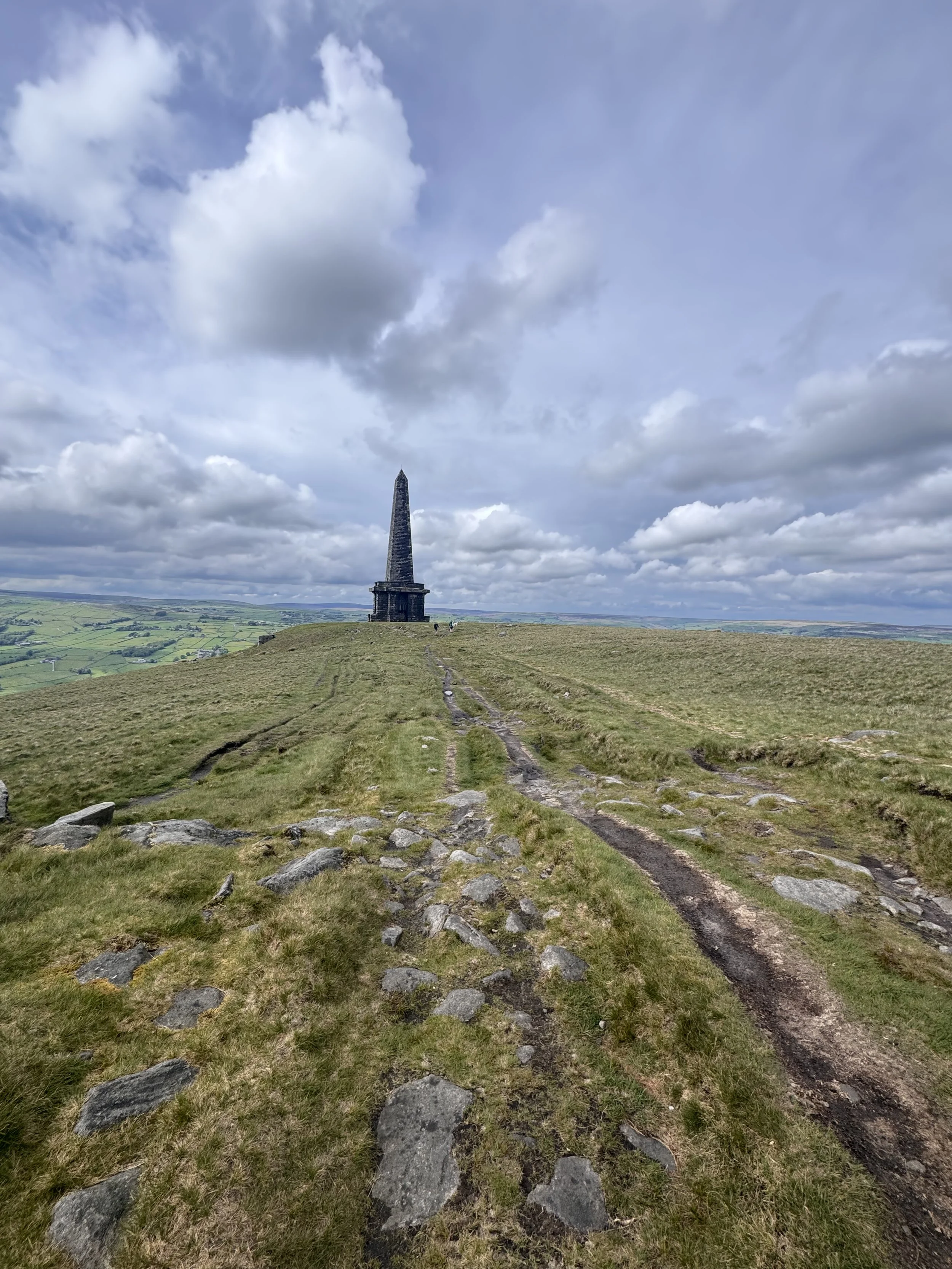
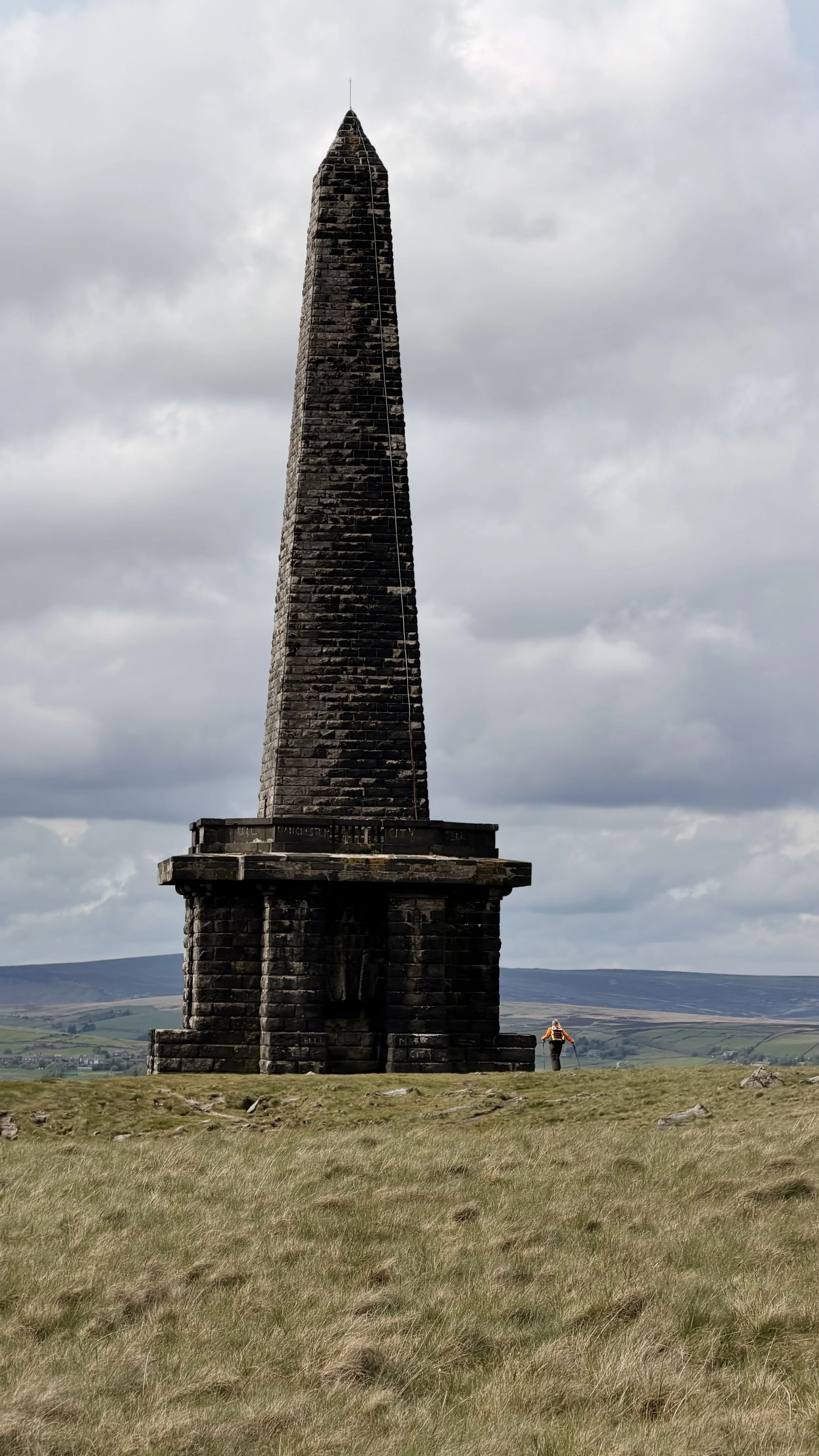
We ate lunch sheltered from the wind by one of the many reservoir walls we walked along for miles. Then there were more old stones: a perfectly arched bridge, 18th century turbary stones and their directive stone note marking the rights for peat digging to the neighboring villages in the moor, and the 121 foot Stoodley Pike Monument that commemorates both the defeat of Napoleon at Paris and the end of the Crimean War with Russia (originally built in 1815, and them repaired after a lightening strike conveniently just as Britain was concluding another war in 1856). We first saw it two miles out, and just kept walking and walking toward it, and then over a little rise in the path and bam! It was there.
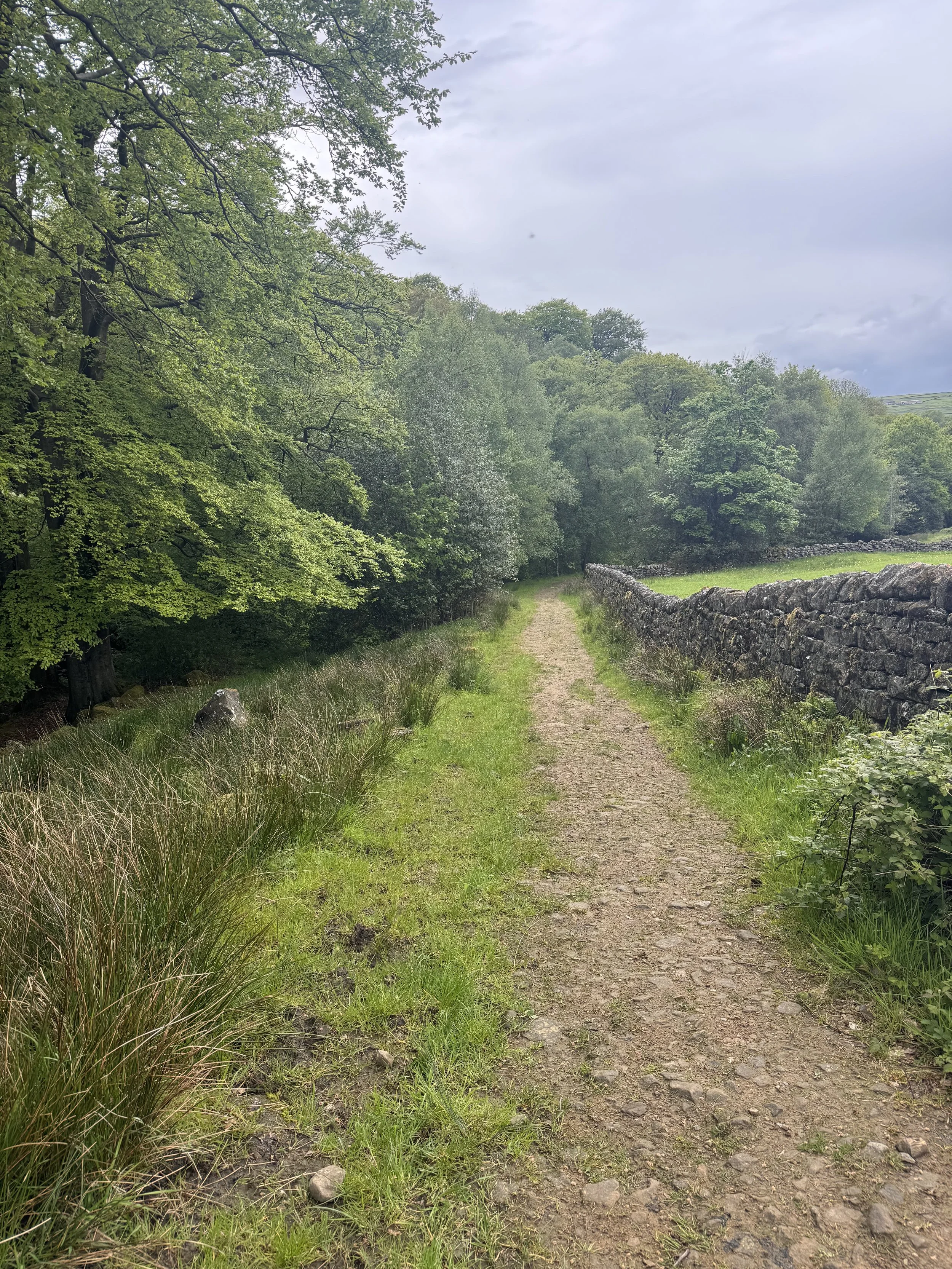
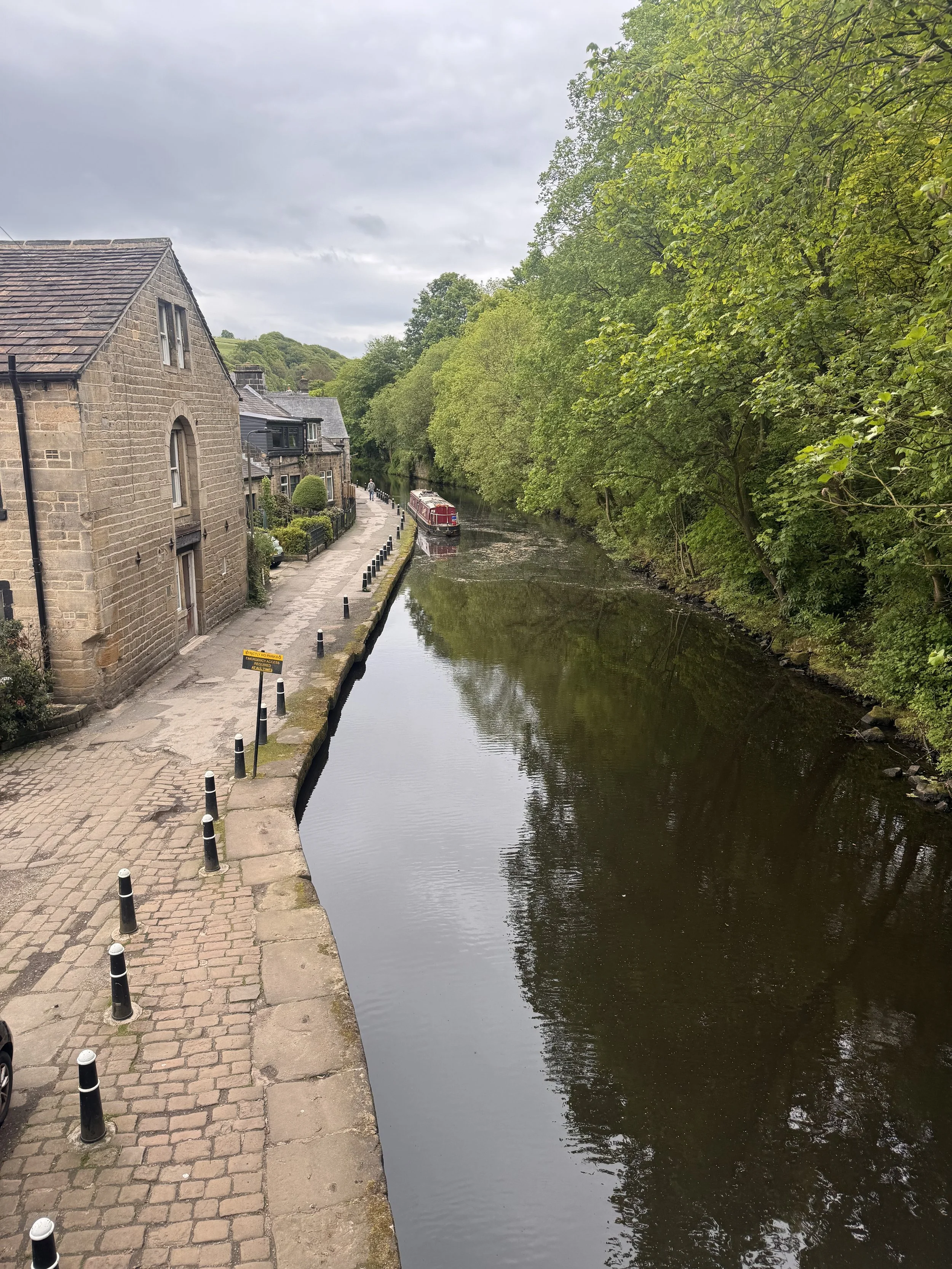
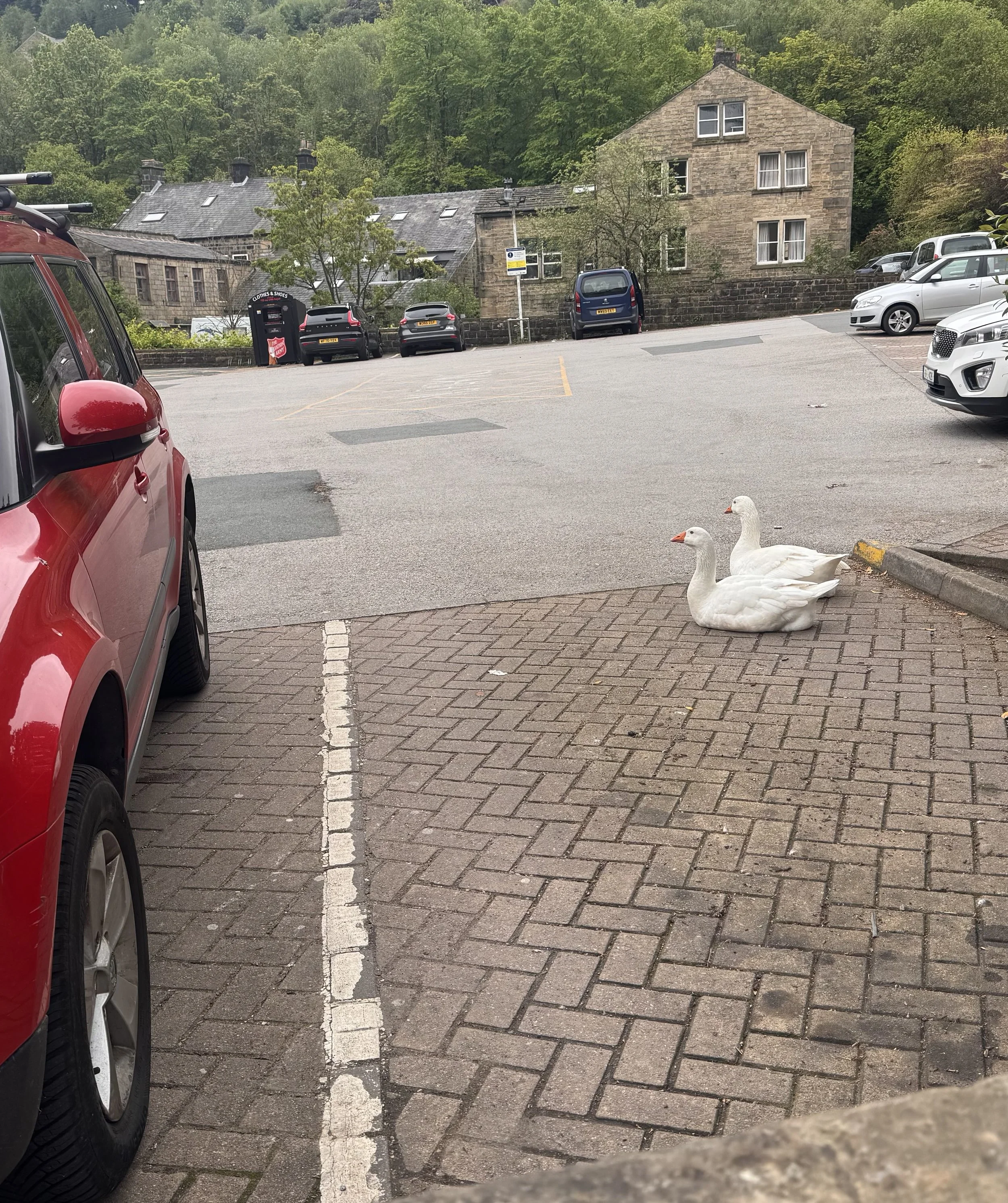
We then found a great track of a wide bridleway that led us by a pretty forest - a wonderful change of scenery, and down a steep descent to the arty town of Hebden Bridge. An old textile mill town, it is now a popular and lively area with lots of live music and creative opportunities, and a quiet canal running through it. Safe enough place for geese to take up a parking spot at the CoOp. We stopped for a pizza, and now my feet are up on stack of pillows recovering from today to prepare for tomorrow.